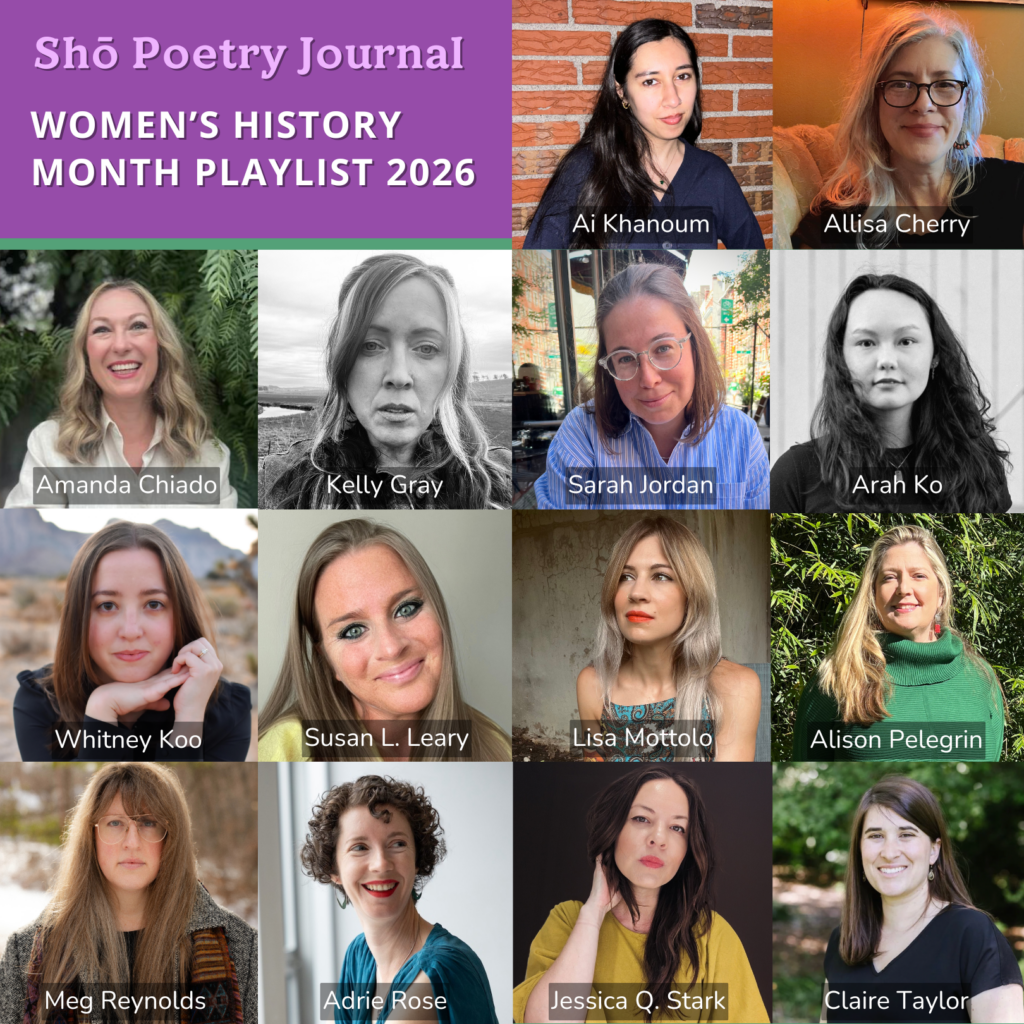
To celebrate Women’s History Month, we’ve curated this playlist of poems published in Shō Poetry Journal by Ai Khanoum, Allisa Cherry, Amanda Chiado, Kelly Gray, Sarah Jordan, Arah Ko, Whitney Koo, Susan L. Leary, Lisa Mottolo, Alison Pelegrin, Meg Reynolds, Adrie Rose, Jessica Q. Stark, and Claire Taylor.
Table of Contents[Hide][Show]
- Two Poems by Jessica Q. Stark
- “Fiddleback” by Arah Ko
- “Fifty-One” by Kelly Gray
- Two poems by Adrie Rose
- “Milkstone” by Meg Reynolds
- “Born From Abundant Love, Do Not Leave Me Unsworn” by Whitney Koo
- “While playing two hours of Chutes and Ladders I contemplate the futility of life” by Claire Taylor
- “Swap Meet” by Ai Khanoum
- “Uprooted” by Susan L. Leary
- “Wearing Dresses” by Lisa Mottolo
- “Phase Change” by Sarah Jordan
- “Second Anointing” by Allisa Cherry
- “Marilyn Monroe Wants to Listen to the Birds” by Amanda Chiado
- “Multitudes” by Alison Pelegrin
Two Poems by Jessica Q. Stark
“The Confession of Marie Antoinette” and “Self-Erasure: The Confession of Marie Antoinette as a Sundial”
from The Confession of Marie Antoinette
I measure my pleasure by lack; a little sundial to track the time. I go here to waste the bodice of my desire. I squat here to perverse publication. What is worse than Cleopatra, than Medusa’s hot rage? Women made monster, made eager, made against clitoral time.
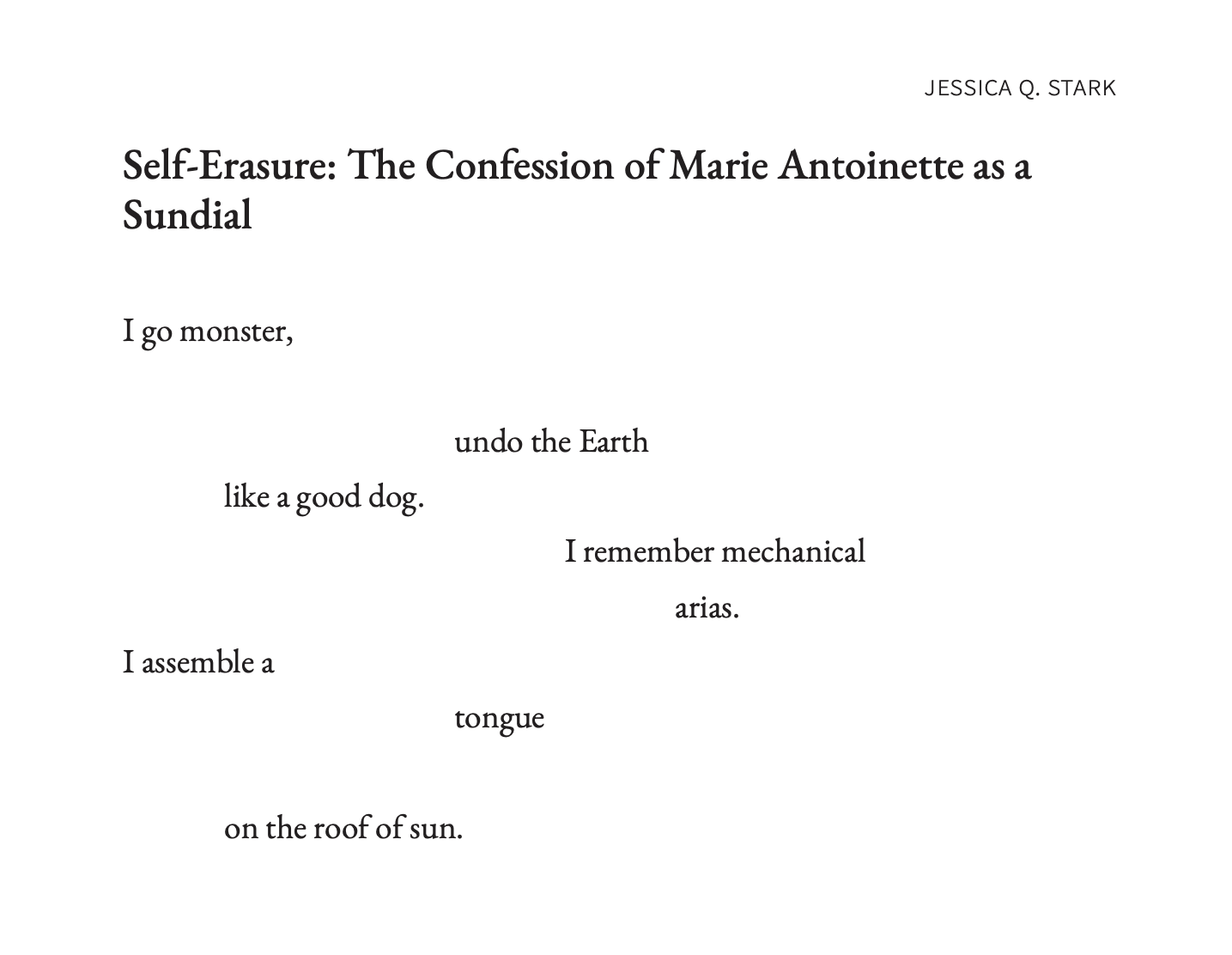
About these poems: When I wrote this poem, I was (/am) steeped in layered forms of deep personal and existential grieving. I had been writing a series of “self-erasure” poems that erase my own poems as mirrors to grief’s nested shells. This is the final one I wrote, and it lives in a manuscript that focuses on the moments before imminent collapse and/or a paradigmatic shift. About doomed empire and its thick trash. In this poem, I imagined what it might feel like to confess to earthly pleasures as a ghost.
“The Confession of Marie Antoinette” and “Self-Erasure: The Confession of Marie Antoinette as a Sundial” appeared in Shō No. 7.
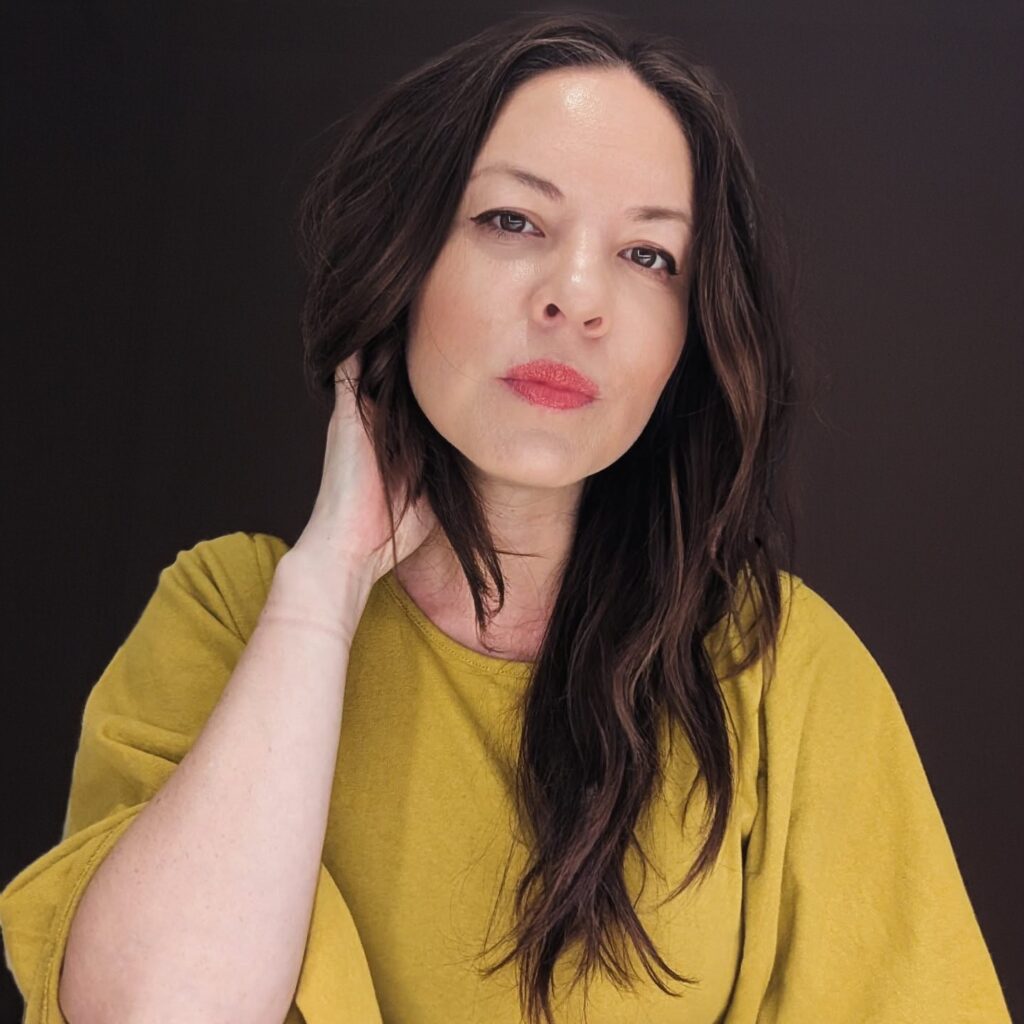
Jessica Q. Stark is the author of Buffalo Girl (BOA Editions, 2023), winner of a Florida Book Award and a finalist for the 2023 Maya Angelou Book Award, Savage Pageant (Birds, LLC, 2020), and five poetry chapbooks, including most recentlxy The Flea, which won first place for the MAYDAY microchapbook prize in 2025. She is a Poetry Editor at AGNI and is an Assistant Professor of Creative Writing at the University of North Florida. She’s had poems published widely in The Nation, Gulf Coast, West Branch, among others. She was named the 2025 South Arts Fellow for Florida and currently co-organizes the Dreamboat Reading Series in Jacksonville. She also curates the Riverrun Poetry Stream, an audio-collection of Florida-based poets.
“Fiddleback” by Arah Ko
from Fiddleback
My tissue pushed the venom out slowly over a full moon in thick yellow rivulets that my mother wiped clean. The look on her face taught me motherhood meant your pain could live outside your own body.
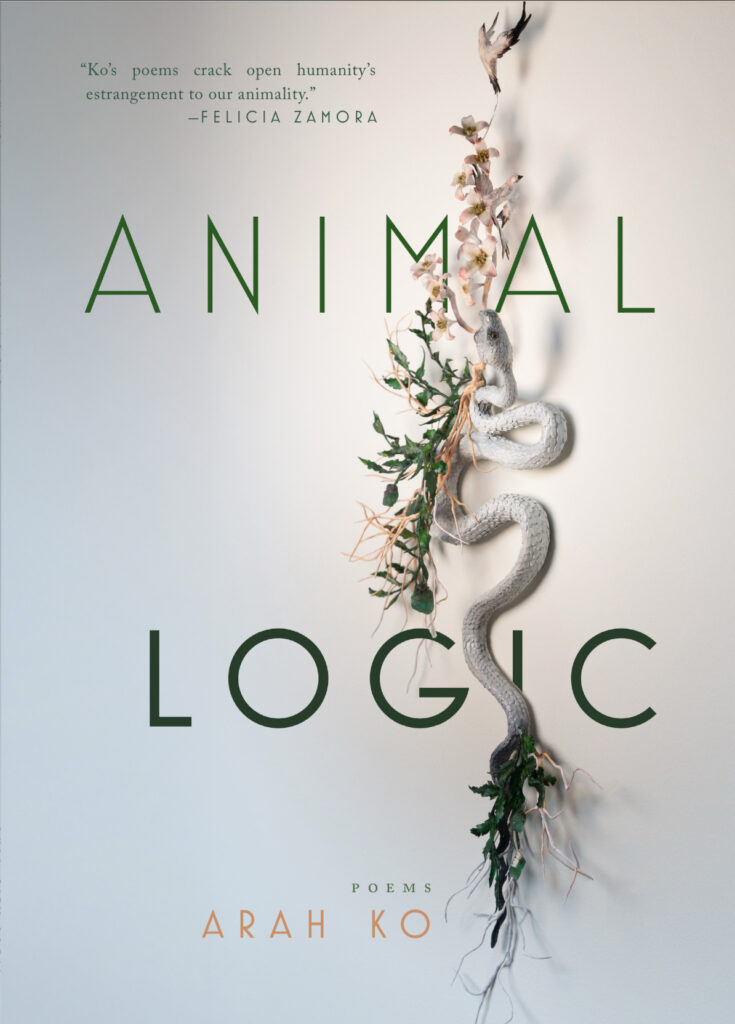
This poem appears in Animal Logic (Bull City Press, May 2026) “Both hymn and howl, Animal Logic speaks in the language of survival. Arah Ko concerns herself with how our world’s glorious flora and fauna are watched, hunted, cared for, named, ready “to add them to the past and future bestiary, that record we living keep for the dead.” These poems—which consider the drift of jellyfish and the soar of blackbirds—are “built for threat, recoiling from bear caves, cleaned bones, venomous tongues.” In equal measures a work of eco-criticism and a study of human behavior, Animal Logic witnesses. It remembers. It resists.”
“Fiddleback” appeared in Shō No. 4. Read our interview with Arah Ko here.
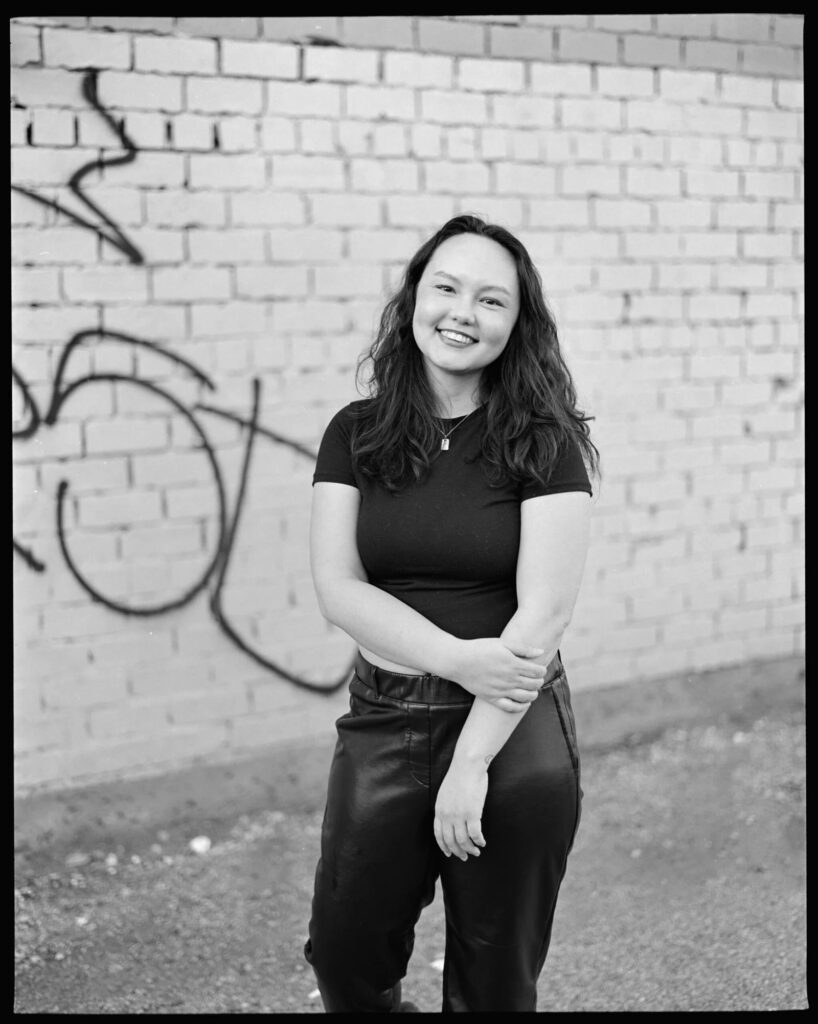
Arah Ko is a writer from Hawai‘i, the author of Brine Orchid (YesYes Books). Her work has been nominated for the Pushcart Prize, Best of the Net, and Best New Poets and appears in American Poetry Review, Ninth Letter, The Threepenny Review, RHINO, Waxwing, Poetry Northwest, and elsewhere. She received her MFA in Creative Writing from The Ohio State University. Catch her at arahko.com.
“Fifty-One” by Kelly Gray
from Fifty-One
              Somewhere inside of her the cracking of bones
can be heard by the other parts of her body; the liver floating warm,
the uterus swollen with age, all with their own eyes and ears,
their own mechanisms of witness.
About this poem: I wrote this poem during the trial of Gisèle Pelicot’s 51 rapists. I had been taking a ferry into the city with my daughter and her friends when a beloved texted me an article about the feminist collective, The Amazons of Avignon, draping banners across the ancient city walls. I’m a sucker for direct action, I teared up. As I looked around, I realized I was the only woman on the lower deck of the Ferry.
In re-reading the poem for Shō, a year later and while the Epstein files seep into the collective consciousness, I am struck by how many cis-men have also been abused, raped, and silenced, and how their silence, although understandable, creates additional work for women, non-binary, and queer folks who are speaking out against our collective rapists and abusers. I want men to be braver. I want them to look up.
“Fifty-One” appeared in Shō No. 7.
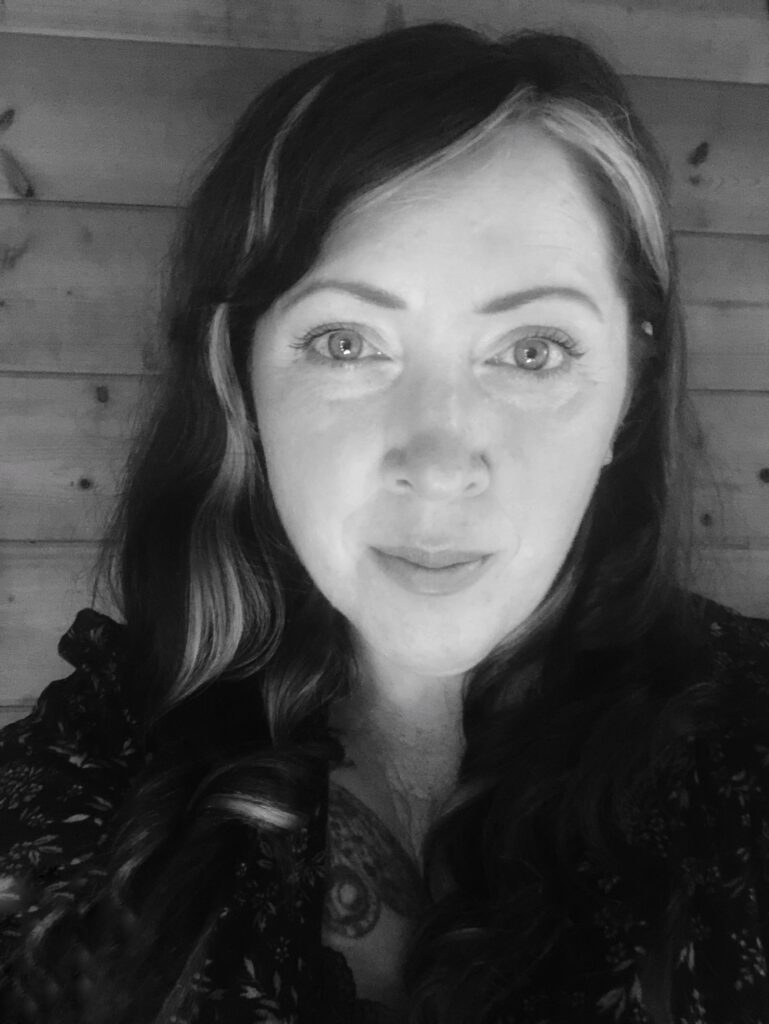
Kelly Gray‘s poems have appeared or are forthcoming in Ploughshares, AGNI, Boulevard, Salt Hill Journal, ZYZZYVA, wildness, New Letters, and the Florida Review, among other places. She is the author of Instructions for an Animal Body (Moon Tide Press, 2021), The Mating Calls//of the// Specter (Tusculum Review Chapbook Prize, 2023), Our Sodden Bond (MAYDAY Chapbook Prize, 2025), and Dilapitatia (Moon Tide Press, 2025). Gray lives with her family in a cabin in the woods. In addition to her four other jobs, she teaches poetry to rural folks in libraries, public schools, and occasionally in the shadow of a dried-out gully.
Two poems by Adrie Rose
“Scene of the { }” and “Medusa in the Temple After the Rape”
from Scene of the { }
         Ordinary room. Ceiling fan with one busted blade where he smashed
the laundry basket again and again.
from Medusa in the Temple After the Rape
I did not
hesitate. For my sisters,

I calcified any tendril
of softness in me.
“Scene of the { }” and “Medusa in the Temple After the Rape” appeared in Shō No. 8.
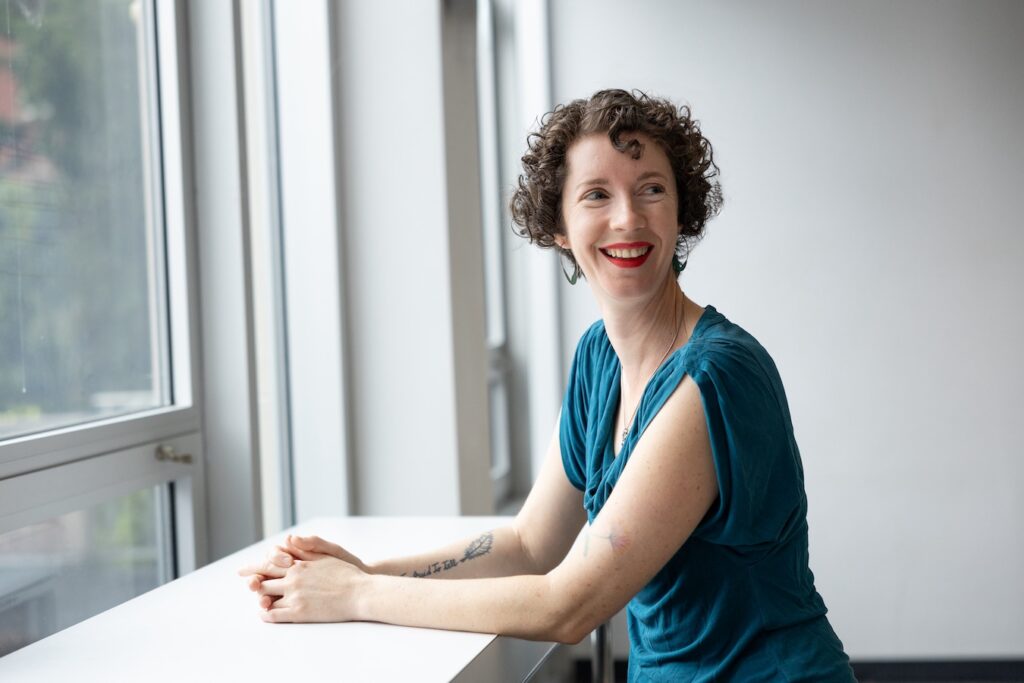
Adrie Rose lives beside an orchard in western MA and is the editor of Nine Syllables Press at Smith College. Her chapbook I Will Write a Love Poem was published in 2023 by Porkbelly Press, and her chapbook Rupture was published in 2024 by Gold Line Press and longlisted for the MA Book Award. She holds a Poetry MFA from Warren Wilson College. Her work has previously appeared in Beloit Poetry Journal, The Massachusetts Review, The Baltimore Review, Ploughshares blog, & she has won the Radar Coniston Prize, among others.
“Milkstone” by Meg Reynolds
About this poem: During the first nine months of my daughter’s life, a period which coincided with much of the covid pandemic’s deepest lockdown, I wrote in a journal on a daily basis. In the past, I had used a daily writing practice to witness a process of transformation in myself. I knew I was changing in order to become a parent. I also knew that I would forget everything if I didn’t write it down. As any new parent knows or caregivers can glean, the infancy stage is extremely brief and intense and the brain struggles to fasten memories in long term storage. Some of the most important moments of my life would have been forgotten entirely had I not kept this journal with the goal of turning those moments into poems. My daughter lost weight after returning home from the hospital, and she was already rather small. Syringe feeding was something I had never known or read about, but it required in me a gentleness and precision that we rarely have call to use. Where did I learn it, this level of attention and care? I learned it from art making. Poetry, drawing, painting, it all sustained in me the muscle memory of complete and embodied focus, a touch light as breathing. It turns out that you need the same focus to make a person as to make a painting. The other piece about this poem is how lonely it feels. We were alone with winter approaching in our room in an evening that felt like it was on the other side of the moon. And yet she thrived. She is now an utterly beautiful five year old, stronger and more agile than I have ever been. I am grateful for that and for all those reading this.
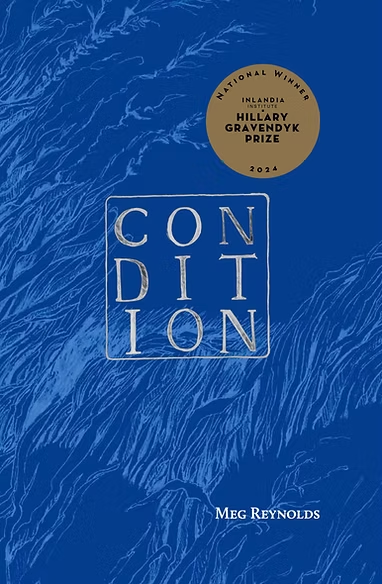
This poem appears in “Condition,” Winner of the 2024 Hillary Gravendyk Prize (Inlandia Institute, 2026).
Condition is a vivid account of early motherhood during the isolation and global intensity of the COVID pandemic. Reynolds witnesses the impossible transformations of her home, her child, and herself while reckoning with a past that overlays the act of parenting. The book is a record of an awe both astonishing and terrible in a rare language rich with metaphor and depth of insight. “To become a parent and to write this book, I had to use every tool and skill at my disposal and had to invent new ones at the moment they were needed. I drew, wrote, slept, ate, fed, found and refound a thousand toys and small items of clothing, brushed hair, had my hair torn out, largely alone. What no one witnessed, I witnessed for myself on the page.” For Reynolds, motherhood is a strange landscape of ghosts, monsters, illness, longing, and surprise. It is a wilderness where she and her family must navigate under the strange constraints of the pandemic within the walls of their small apartment and the empty neighborhood. In the absence of others, parenting is an invention and the self is an ever-changing reality. Between the poems, poetry comics, hybrid illustration, and drawn collages, Condition is a powerful collection of work that attests to hard work of love and artmaking.
“Milkstone” appeared in Shō No. 6 and was nominated for a Pushcart Prize.
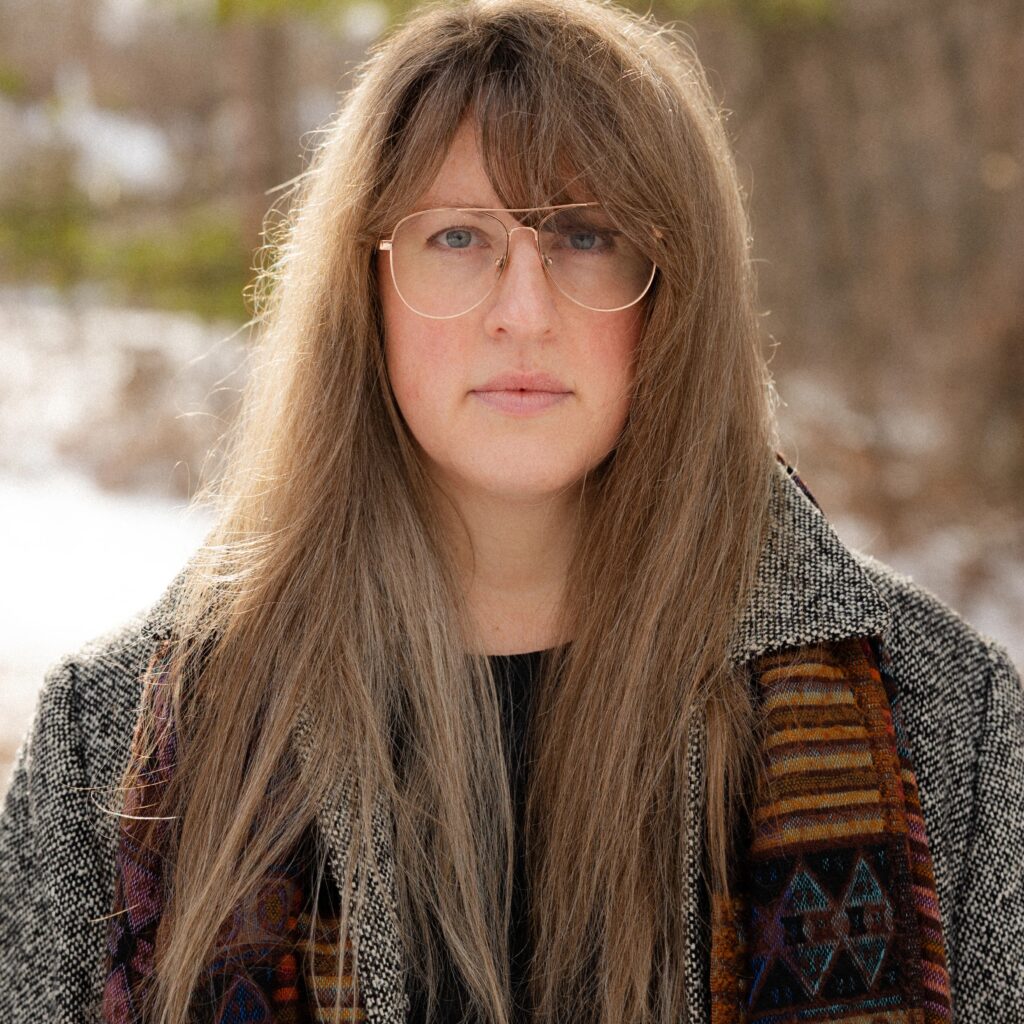
Meg Reynolds is a poet, artist, and teacher from New England. An instructor in writing and humanities at Vermont Adult Learning in Burlington, her work has been published in a number of literary journals including Mid-American Review, RHINO, The Offing, Iterant, Prairie Schooner, New England Review, and the Kenyon Review. A graduate of the Stonecoast MFA program, her poetry and comic work has been three times nominated for the Pushcart Prize and once for Best the Net. Her first collection of poetry comics, A Comic Year, was published in October 2021 from Finishing Line Press. Her second collection, Does the Earth, was published in May 2023 from Harpoon Books. Reynolds’ poetry was published in Best New Poets 2023. Reynolds’ was also the 2024 winner of Inlandia Institute’s Hilary Gravendyk Prize with her collection, Condition, forthcoming April 2026. You can read more of her work via her biweekly publications on her Substack, Condition and Other Conditions.
“Born From Abundant Love, Do Not Leave Me Unsworn” by Whitney Koo
from Born From Abundant Love, Do Not Leave Me Unsworn
I cry in the shower and come out smiling at my husband ironing. He speaks to me noun noun noun to cut the narrative short.
“Born From Abundant Love, Do Not Leave Me Unsworn” appeared in Shō No. 8.
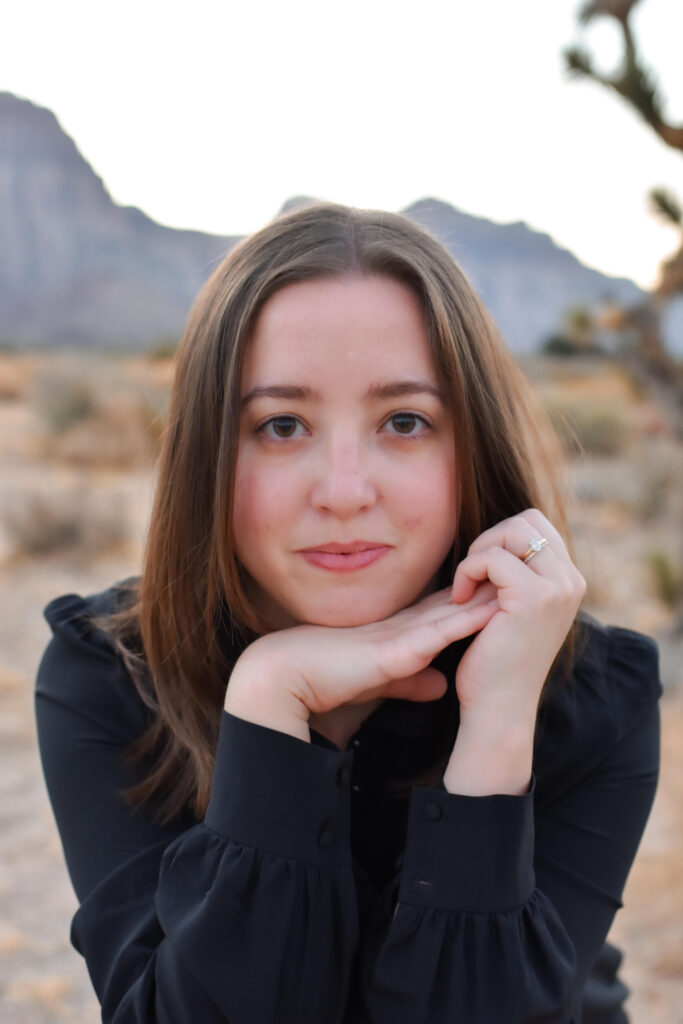
Whitney Koo is the author of Any Gesture (Black Lawrence Press, 2026) and Founder/Editor of Gasher Press. Her work has appeared or is forthcoming in journals such as POETRY, Hayden’s Ferry Review, the Los Angeles Review, Colorado Review, and others. She holds a PhD in English from Oklahoma State University and an MFA from the University of Colorado Boulder.
“While playing two hours of Chutes and Ladders I contemplate the futility of life” by Claire Taylor
from While playing two hours of Chutes and Ladders I contemplate the futility of life
At the time I asked my mother what it would feel like to drown but she didn’t know—like falling asleep, perhaps. Now I am the mother and I don’t have any answers either. Roll move fall. Roll move fall.
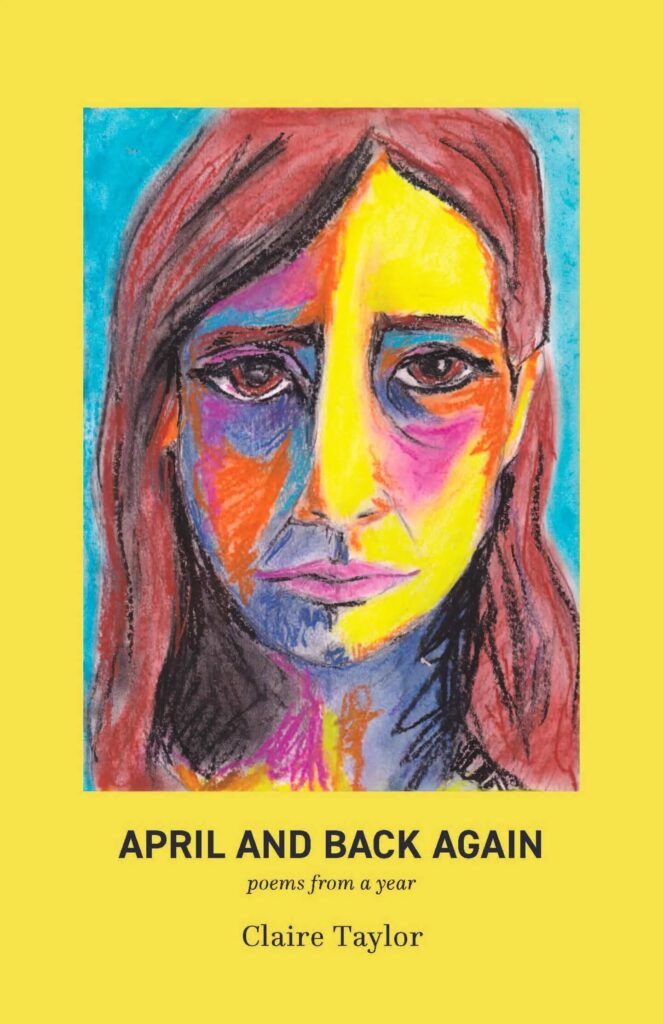
This poem appears in “April and Back Again” (Publishing Genius, February 2026).
Tracking the final year of her thirties from April 2024 through April 2025, Claire Taylor’s debut poetry collection is an intimate portrait of loving and living against a backdrop of existential dread. Deftly oscillating between quotidian scenes of family life and the anxiety of raising children amid the realities of climate change, gun violence, and a democracy on the verge of demise, Taylor leads us through the ups and downs of a year that was history in the making … Full of quiet meditations, heartfelt introspection, and delightful hints of humor, April and Back Again is like the first hopeful signs of spring after a long, cold winter.
“While playing two hours of Chutes and Ladders I contemplate the futility of life” appeared in Shō No. 7.
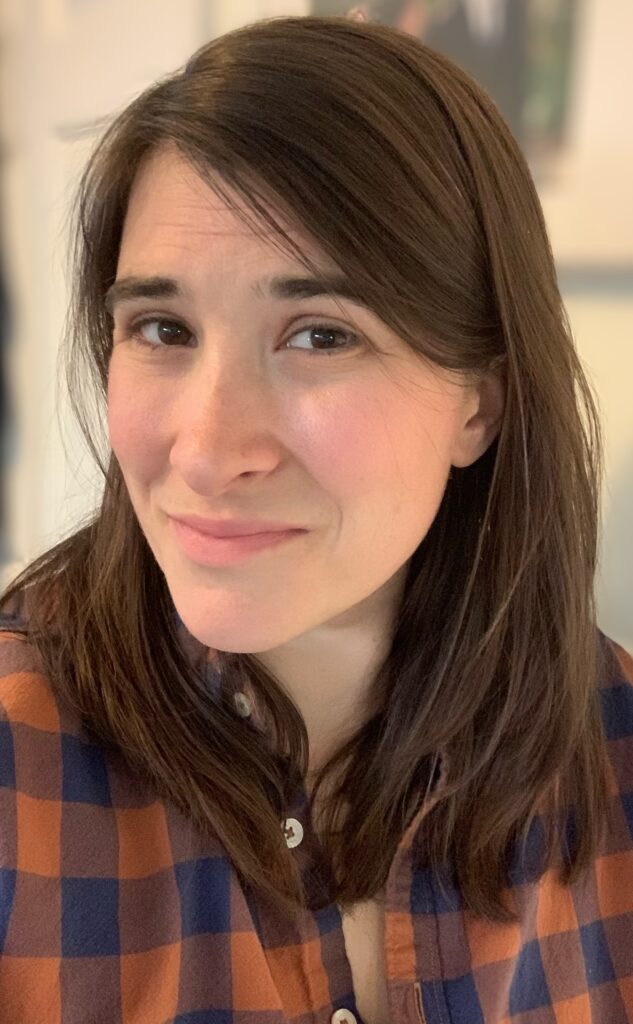
Claire Taylor is a writer for both adult and youth audiences. Her debut poetry collection, April and Back Again is available now from Publishing Genius. Claire is the founding editor of Little Thoughts Press, a literary magazine for young readers. She lives with her family in Baltimore, Maryland, in an old stone house where birds love to roost. You can find her online at clairemtaylor.com.
“Swap Meet” by Ai Khanoum
from Swap Meet
                          It’s the hair on
my arms, and my sisters’ faces when the women
come over for tea and fruit and promise us their
sons, who are off making names for themselves.
About this Poem: Ai Khanoum is a poet whose work explores memory, displacement, and how the inheritance of trauma is carried through the body, rituals, and language. Writing from within the Afghan diaspora, she is drawn to spaces between language and generations, where tenderness can coexist with grief. She is interested in the quiet conversations and negotiations, drawing on recollection and listening to histories that cannot ever be fully recovered or translated. She invites curiosity and meditation, about survival through political violence and inherited knowledge, particularly passed through women.
Confessional in nature, this poem draws on fragmented narrative and reflects on how personal and collective histories shape our understanding of home and family. With close attention to the ordinary, the poem draws readers into a space of recognition, imploring them to consider their conversation with the unknown.
“Swap Meet” appeared in Shō No. 7.
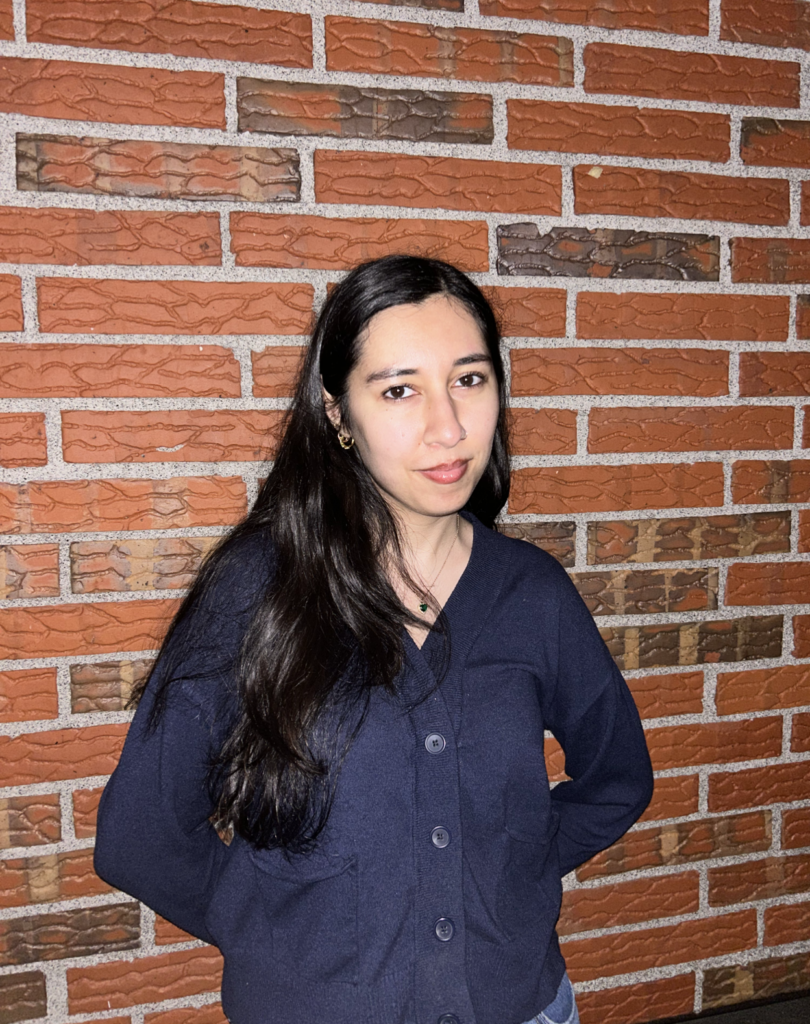
Ai Khanoum is an Afghan poet and writer currently pursuing an MFA at Sarah Lawrence College. Her work has appeared or is forthcoming in The Rising Phoenix Review, Shō Poetry Journal, The Racket, Tell Me About the Dream, an anthology inspired by the work of Richard Siken, and elsewhere. When she is not writing, you can find her watching Al Pacino movies or contemplating the water.
“Uprooted” by Susan L. Leary
from Uprooted
                  How does
a self happen when of what we bury
& what we unearth, there's no
telling the difference?
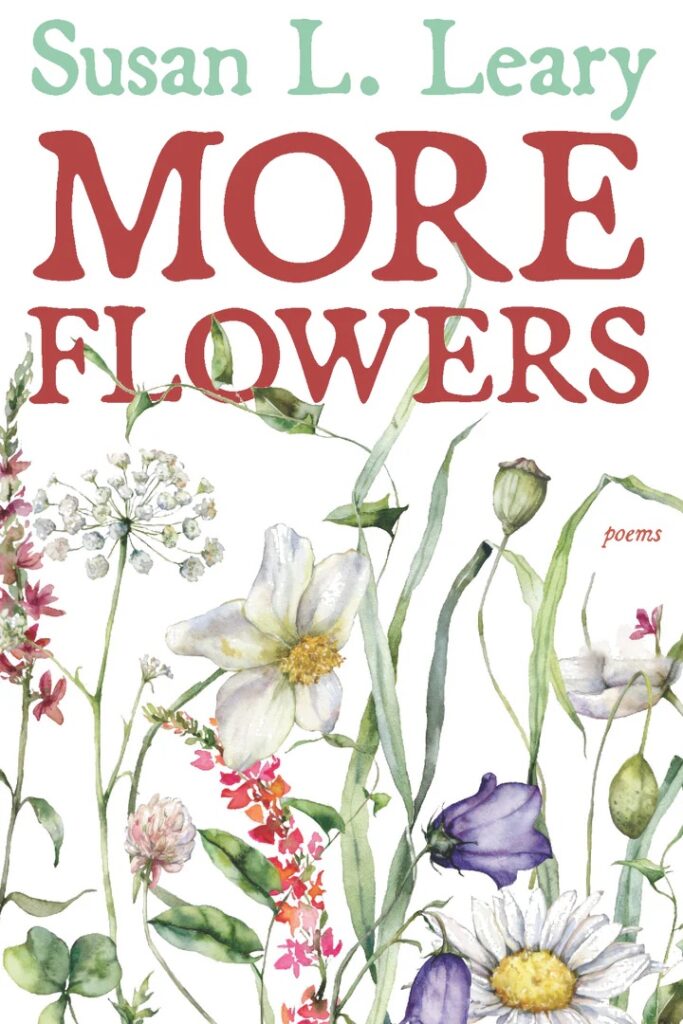
This poem appears in “More Flowers” (Trio House Press, February 2026).
Quiet tensions drive this collection: the ox walking on ice and the voice box buried in a meadow, frayed wings grasping at the updraft. Leary offers More Flowers, pulling us close enough to inspect paradox, awareness, and the limiting roles women must play, all the while asking, “What, of any of this, is holy?” But these poems make a map toward a new kind of survival, warning us not to feed the stray cat, as “her hunger is what keeps her alive.” In the distance, Leary promises, is the waft of a glorious perfume—we’re simply asked to be careful as we advance, to remember “what the flowers have endured, before they were flowers.” —Allison Adair, author of The Clearing
“Uprooted” appeared in Shō No. 5.
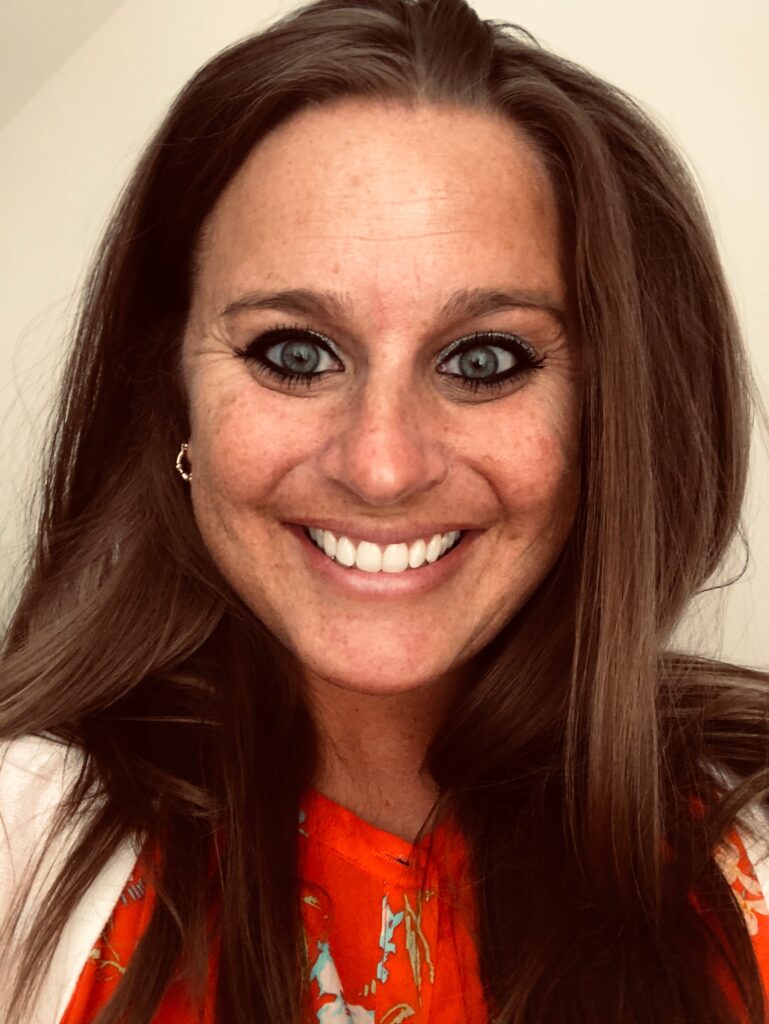
Susan L. Leary is the author of six poetry collections, including SENTENCE (Nine Syllables Press, fall 2026), selected by Eugenia Leigh to win the Nine Syllables Press Chapbook Contest; More Flowers (Trio House Press, 2026); and Dressing the Bear (Trio House Press, 2024), selected by Kimberly Blaeser to win the Louise Bogan Award. Her poetry has appeared or is forthcoming in such places as North American Review, Indiana Review, Third Coast, Cream City Review, Smartish Pace, Diode Poetry Journal, The Arkansas International, and Verse Daily. She holds an MFA from the University of Miami and lives in Indianapolis, IN. Visit her at www.susanlleary.com.
“Wearing Dresses” by Lisa Mottolo
from Wearing Dresses
        I swear I was a queen of night /
a floating ghost who paid half the rent
while wearing dresses
“Wearing Dresses” appeared in Shō No. 8.
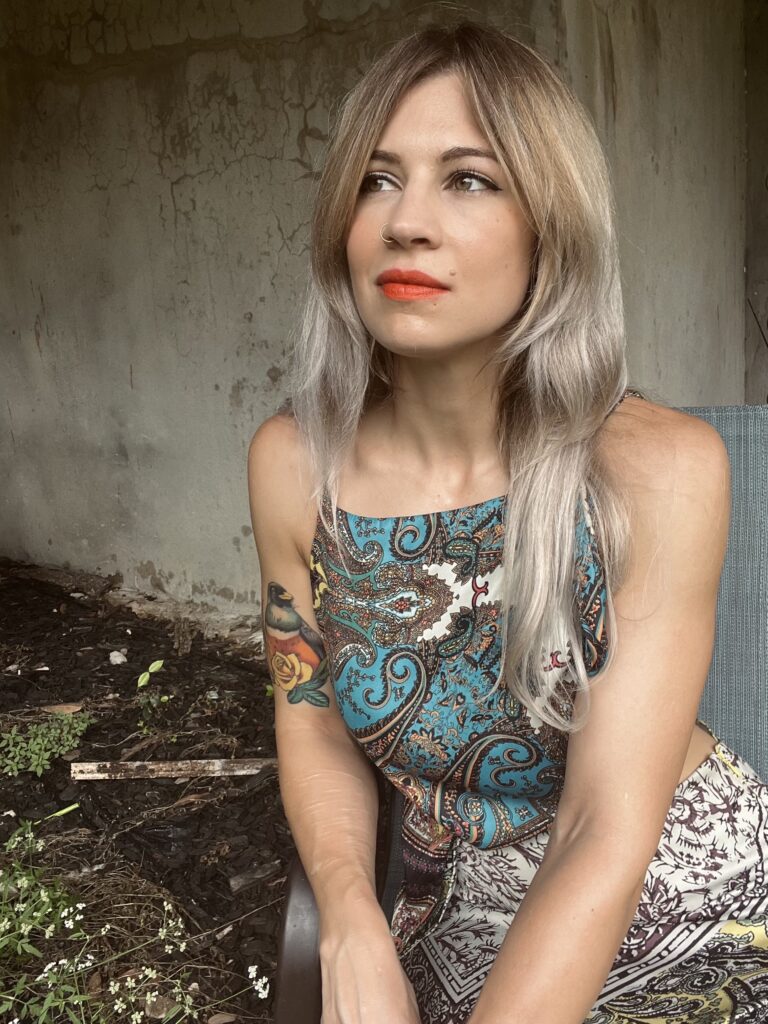
Lisa Mottolo is the founder of Lit Fox Books and the author of the poetry collection How to Monetize Despair (Unsolicited Press, 2023). She has attended writing programs at UC Berkeley and Kenyon College, and her work has appeared in Penn Review, The Laurel Review, Diagram, Santa Clara Review, Stonecoast Review, Louisiana Literature, and others.
“Phase Change” by Sarah Jordan
from Phase Change
If I can smell burning in the air I can hear sirens circling.
How am I going to become more modern than this.
“Phase Change” appeared in Shō No. 8.
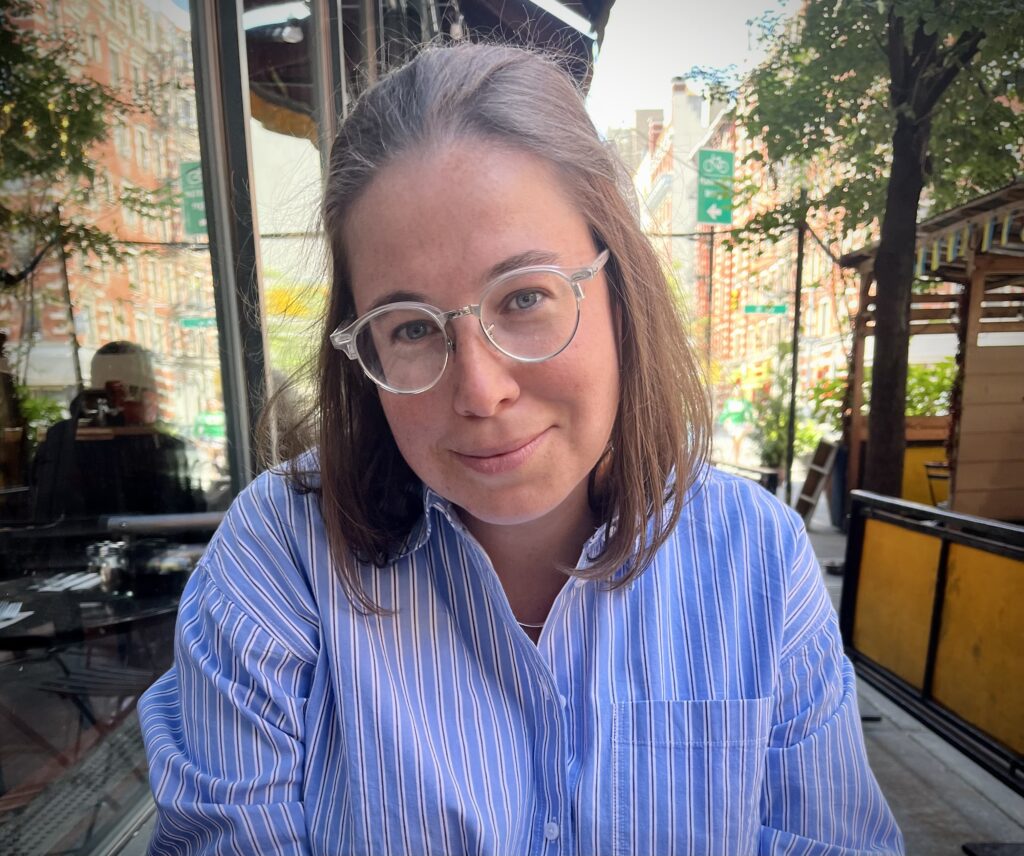
Sarah Jordan received the 2023 Bernice Slote Award from Prairie Schooner. She earned her MFA from NYU, where she is an adjunct professor.
“Second Anointing” by Allisa Cherry
from Second Anointing
Having always confused my whims for divination,
I expect signs to appear when called.
About this poem: Much of my poetry grapples with reclaiming power after deconstructing from an inherited patriarchal faith. In my family’s religion there’s a little-talked-about temple ritual that few are invited to participate in, called a Second Anointing. It’s an ordinance that requires the covenant of marriage. This poem, titled “Second Anointing” imagines a woman arriving at that sacredness through autonomy and through the quotidian. The televangelist quote is pretty close to actual and I’ve carried it around with me since 1999 hoping it would find its way into a poem, though I never learned the name of the preacher who said it.
“Second Anointing” appeared in Shō No. 6.

Allisa Cherry is the author of An Exodus of Sparks (Michigan State University Press) and the 2024 recipient of the Wheelbarrow Books poetry prize (RCAH Center for Poetry). Her work has appeared in journals such as The McNeese Review, TriQuarterly, The Baltimore Review, and The Penn Review. She currently lives in Oregon where she teaches workshops for immigrants and refugees transitioning to a life in the U.S. and serves as a poetry editor for West Trade Review.
“Marilyn Monroe Wants to Listen to the Birds” by Amanda Chiado
from Marilyn Monroe Wants to Listen to the Birds
Having always confused my whims for divination,
I expect signs to appear when called.
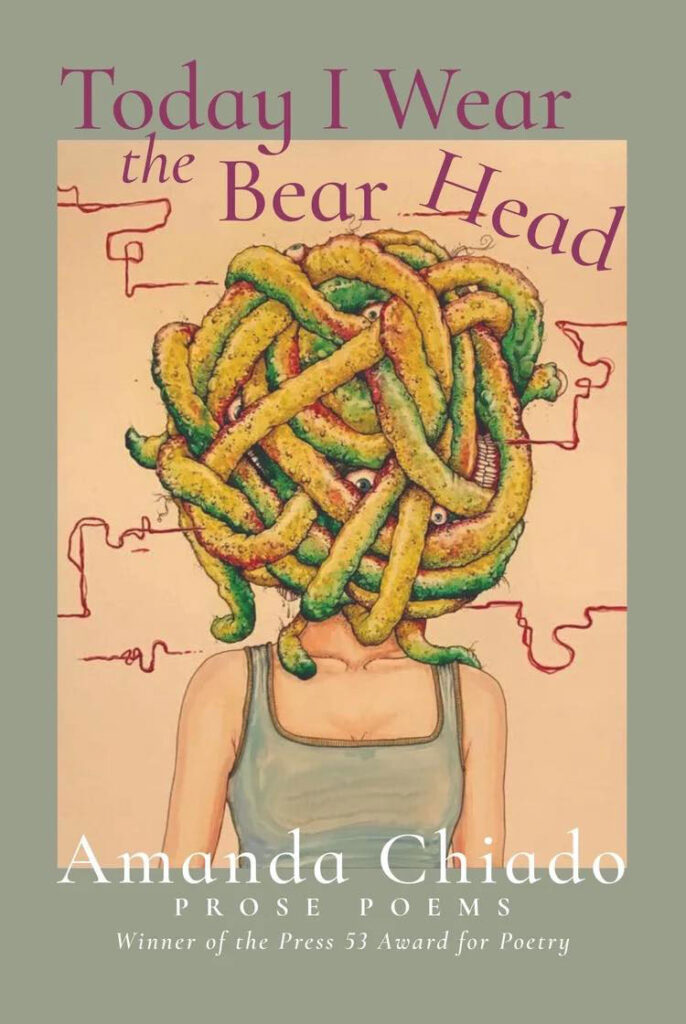
This poem appears in “Today I Wear the Bear Head” (Press 53, March 2026), Winner of the 2026 Press 53 Award for Poetry.
Amanda Chiado’s dazzling prose poetry collection lures us into her fascinating secret world of wonder, magic, haunting beauty, persistent memory, fantasy. We are left in awe, grateful for the ardent turns and surprises: the exquisite journey. This is one of my favorite prose poetry collections from an exciting and new master of the form. This spellbinding book will leave you charmed and entranced yet still wanting more of the exhilarating experience of reading a prose poem by Amanda Chiado. Well done, poet! ─Jose Hernandez Diaz, author of Portrait of the Artist as a Brown Man
“Marilyn Monroe Wants to Listen to the Birds” appeared in Shō No. 5.
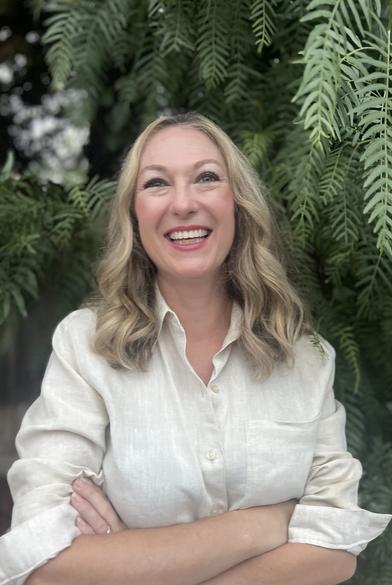
Amanda Chiado won the 2026 Press 53 Award for Poetry, selected by Tom Lombardo for her prose poetry collection, Today I Wear the Bear Head. Her poem “My Great-grandmother Had the Face of Beast” was selected by Diane Seuss for The Best Microfiction 2026. She is the author of Prime Cuts (Bottlecap Press, 2025) and Vitiligod: The Ascension of Michael Jackson (Dancing Girl Press, 2016). Her poetry and fiction have appeared in RHINO, Puerto del Sol, Pithead Chapel, The Pinch, Best New Poets, and many others. Amanda is writer, teacher and arts advocate. She is the Director of Arts Education for the San Benito County Arts Council and is a California Poet in the Schools.
“Multitudes” by Alison Pelegrin
from Multitudes
I was a horse girl. I took Black Beauty to heart

but kept it secret, another of my multitudes
swarming on the inside.
About this Poem: I remember writing this poem over and over by hand in a notebook. I always cut a lot from my writing, but this one was unique in the sheer amount of lines I deleted. It was starting to be about everything on planet earth, and I lost sight of my original idea, which was me sort of marveling over the many contradictions, interests, and experiences that go into making a person. TLDR: Poem got out of control, I cut it back and still found room for Black Beauty, Izumi Shikibu, and airbrush tee shirts.
“Multitudes” appeared in Shō No. 3.
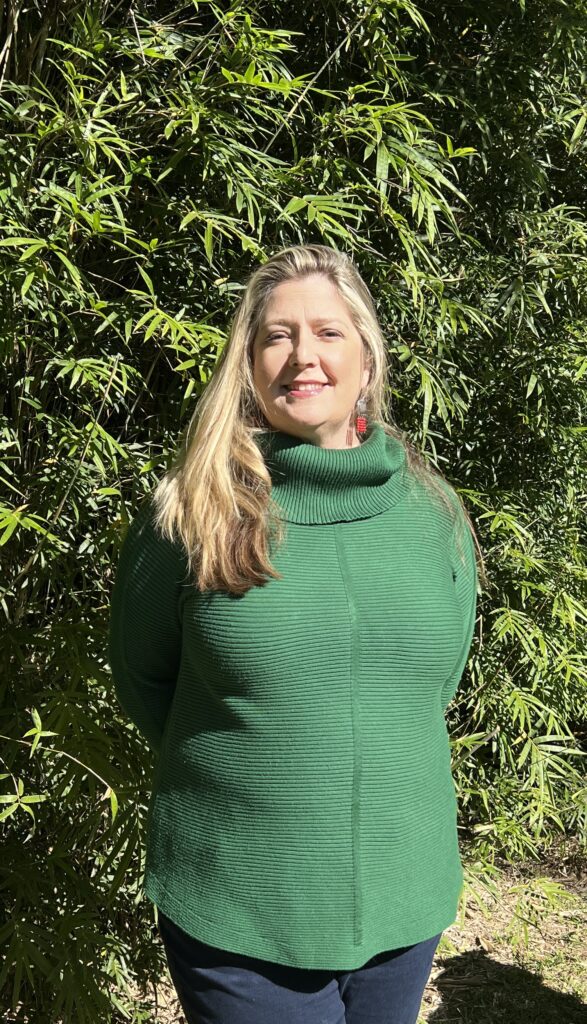
Alison Pelegrin is the recipient of fellowships and grants from the National Endowment for the Arts, the Louisiana Board of Regents, the Foundation for Louisiana, and the Academy of American Poets. Alison’s two most recent poetry collections are Our Lady of Bewilderment (2022) and Waterlines (2016), both with LSU Press. Her work has appeared in The Southern Review, The Missouri Review, and The Best American Poetry 2025. While serving as Louisiana Poet Laureate from 2023-2025, she founded the Lifelines Poetry Project, and her poetry outreach in prisons continues to this day. She is Writer-in-Residence at Southeastern Louisiana University.