INTERVIEW
A Conversation between Alex Tretbar and Michael Juliani
Michael Juliani interviews poet Alex Tretbar, author of the chapbooks According to the Plat Thereof (Ethel) and Kansas City Gothic (Broken Sleep), whose poem “Ballad from a Subsidized Bedroom” was published in Shō No. 3: Revival Issue.
I first learned about poet Alex Tretbar when I was volunteering as a poetry reader for PEN America’s Prison Writing Program in 2022. His poem, “Variations on an Undisclosed Location,” a serial poem engaging with the subconscious effects of prison and solitary confinement, showed up in my slush pile. It was an electrifying display of fragmentary lyricism, crystallized by Tretbar’s dexterity with syntax and enjambment, as well as his instinct for leaving the right details unsaid amid a potent surge of imagery. It won first prize. (Read Tretbar’s article regarding PEN.)
Later that year, after Tretbar’s release from prison, I kept encountering his work in poetry journals. His output remains relentless, spanning a range of discrete poems, project excerpts, essays, interviews, and fiction. Two recently published chapbooks showcase Tretbar exploring semi-conceptual yet lyrical projects that reach into the dark matter of American life, tracking the elements of his prison experience that seep through the membrane of American culture.
After meeting Tretbar at a reading in Kansas City, where he lives and works as a graduate research assistant at the University of Missouri-Kansas City, we started work on this interview.
Michael Juliani
How did you initially find the spark to write poetry? What did poetry offer you that felt new and exciting?
Alex Tretbar
I don’t really know the answer to this question anymore. I’ve written poetry probably since middle school but didn’t really take it seriously until I was incarcerated. William Brewer’s book I Know Your Kind was big for me and I think everything has kind of spiraled out from my first reading of that book after a guard unexpectedly slid it under my cell door (my mother had sent it to me, but I didn’t know that until I spoke with her later on the phone). I hadn’t really read much contemporary poetry (this was late 2017). I didn’t know you could write like that, especially about addiction (I was still in an early and precarious stage of recovery from heroin and meth). I think it was probably Brewer’s handling of the image that clicked for me, the strangeness and compression, and the way his syntax and enjambments complicate each other: “From its soot, from clay, you’d assemble your sons, their hands / assemble like air above a creek cattails // hem the edge of like a skirt / the hands slide under in the dark of your infinite // storeroom and wander” (“Appalachia, Your Genesis”). I think there was also just something exciting about writing poetry that I had never really understood until incarceration, how it can accommodate so much (seeming) non sequitur, so much wandering of mind and affect. Writing poetry felt adventurous and wild, and that kind of feeling comes at a premium in prison.
Michael
You have a background in journalism. Kansas City Gothic and According to the Plat Thereof, to my mind, carry and contort journalistic tendencies of observation, logbook-like accounting, and inquiry in a voice that lends itself some distance. Journalism also implies a kind of observation distinct from data collection and surveillance, which you explore in your work. How do you think your background in journalism contributes to your poetics?
Alex
I’ve been wondering about this lately, too. Most of the actual journalism I’ve produced in my life has been related to tech, food, and music. And while not exactly journalism, I think technical writing is also something that has equally influenced my writing. I used to work for a law firm where I ghostwrote cover letters for scientists and researchers seeking green cards in the United States. For every project I had to write 3-6 letters from the perspective of 3-6 real, living scientists or researchers who had agreed to advocate for the client seeking a green card. And so I had to pretend like I knew what the recommenders knew, I had to write confidently and authoritatively about specialized fields of study like neuroinformatics and sensor theory, and I had to do so in the voices of 3-6 different people, all of whom had different relationships with the client. Journalism and technical writing often felt like throwing my voice, performing ventriloquism. I think that working in these specialized vernaculars for talking about culture, science, and technology permanently altered the way I experience language. I’m fascinated by jargon and precise, uncompromising syntax. But now that kind of writing is most interesting to me when it is mocked and/or when it is troubled by a lyric agent.
Michael
Throughout my reading of both chapbooks, I thought about Rimbaud’s dictum to seek a derangement of the senses — an estrangement from the passivity of consciousness. It struck me, not only how nicely “estranged” the poems of both books are, but also how you explore the ways that institutions (whether it’s a shopping center or the prison system) alter the depths to which we’re able to communicate. How do you feel that the limits and altered channels available in prison shaped the future writing of these collections?
Alex
I feel like these two projects are very different from one another, but perhaps what they have in common in terms of their being influenced by “the limits and altered channels available in prison” is that there is (I hope) a certain pressure being exerted on the language, a sense of linguistic confinement. There are forms of written and verbal communication that I think I absorbed from the carceral environment—the discourses of incarcerated people as well as of their captors and jailors. In terms of the former, I was always taken by the subtle use of metaphor and euphemism. If someone wanted to know when you’d been arrested, they often simply asked, “When did you fall?” That kind of thing. Extreme compression of emotion into language. And of course euphemism is a powerful tool for the carceral state, too, as with the use of the sterile and anodyne “Special Housing Unit” (“SHU”) to describe hell on earth, the hole, solitary confinement. And then there’s Oregon’s whitewashing of “inmate” into “AIC” (“Adult in Custody”), by which the incarcerated subject (and the act of incarceration itself) becomes obscured by an acronym. I think of “When did you fall?” as a kind of lyric counterpoint to the absurd, corporate, and violent alphabet soup of the prison’s official administrative language.
“There are forms of written and verbal communication that I think I absorbed from the carceral environment—the discourses of incarcerated people as well as of their captors and jailors. In terms of the former, I was always taken by the subtle use of metaphor and euphemism. If someone wanted to know when you’d been arrested, they often simply asked, “When did you fall?”
In my experience, consciousness is not passive in prison—it becomes “estranged from passivity,” as you say. Under conditions of extreme confinement and control, you become hyperconscious of your own consciousness. This doesn’t tend to be a desirable mode of being, at least not in such a high-pressure environment and for such a long period of time, and so you try to find ways to manage or escape it. If successful, meditation and work on the self can provide the prisoner with a way of guiding the intense meta-consciousness that is produced by imprisonment. The other route is to attempt to regain some semblance of passive consciousness, often by simply “getting used to it,” allowing the sustained trauma of incarceration to wash over you through the years, embracing the affective blunting that occurs over long periods of imprisonment, the numbing of the self via TV, drugs, card games, etc. I’m not knocking this latter method—I myself engaged in it, and the two routes aren’t necessarily mutually exclusive. Everyone tries to find a way.
I believe that poetry is well equipped for conveying these various forms of thinking and being and naming, and that probably shows up in the many voices bouncing around in the chapbooks, but I don’t think I was consciously thinking about any of that when I was working on them.
Michael
Both these chapbooks have unique structures. In Kansas City Gothic, eleven-lined poems, layered into “Movements” and “Codas,” bleed into each other similar to a crown of sonnets. In According to the Plat Thereof, alternating “Unbodied Poems” and fragmented/disrupted sonnets meet the reader with a formal disorientation. How did you arrive at the forms for these collections? How did you begin to conceive of them as projects as opposed to discrete poems?
Alex
The eleven lines were random and incidental I think, but I had been wanting to write a crown of sonnets for some time at that point. If I’m remembering correctly, I think I just wrote a double-spaced 11-line poem with Schuyler-like short clipped lines, and I liked its aerated dimensions on the page, how it behaved like a sonnet even though it was a few lines short of one, arriving more quickly at its final image. I wanted to repeat it. Something about how the last line becomes the first line in a crown of sonnets has always fascinated me. The way you, as the writer, finish a poem, and then find yourself already in the next poem, where the end of one world is now the beginning of another, and you keep on writing.
The furcated sonnets in According to… were contrapuntal attempts at braiding two or more utterances into a single poem whose ending manages to cinch together the loose ends of those voices. As for the unbodied poems, I stumbled onto the idea when I was thinking about how weird it is that artists and poets can just casually deny their works a title by calling it “untitled,” and how that word still manages to function as a title. And so I wondered whether you could also deny a poem its body, and what that would look like. And what if the title tried to do all the work that a body usually does while still operating within (though sometimes eventually breaking) the constraints of the technology of the title.
Michael
You wrote Kansas City Gothic in the months after your release from prison. What was it like to write that manuscript in a setting where you had more agency over your time and movements throughout the day? How do you think the immediacy of that transition affected the writing of its Movements and Codas?
Alex
Looking back, I can say that Kansas City Gothic was probably an experiment born primarily out of my newfound access to the internet and a smartphone (which I had taken for granted prior to incarceration), though I’m not sure I was conscious of that when writing it. I would walk around and use apps to identify all the flowers and mushrooms and trees I was amazed by.
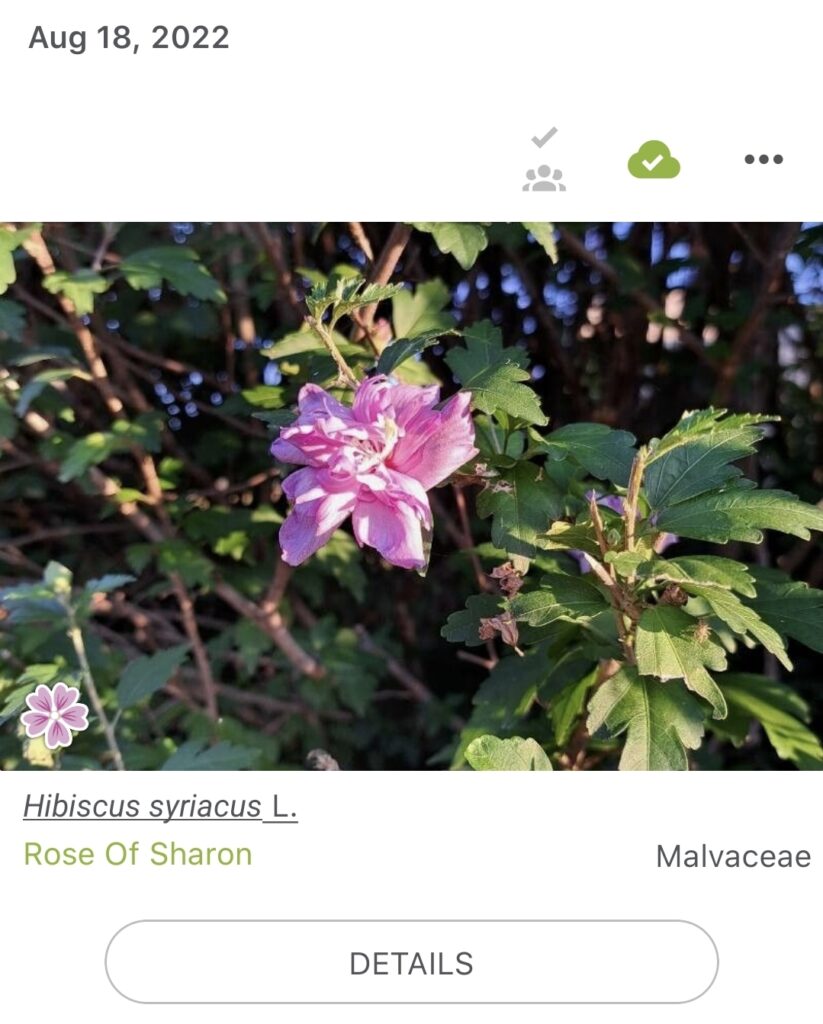
I’d find old haunts (in Los Angeles, Portland, Wichita, Lawrence, and Kansas City) on Google Maps and study how they looked in 2013, 2015, 2017, 2019, 2021, etc. Once again I was able to flood myself with the films and albums and books that I was most interested in, instantly. A laptop and a phone with a notes app felt like overkill.
I was in prison during the onset and height of covid, and so, despite suffering countless lockdowns and quarantines, I wasn’t privy to the particular form of communal isolation and desolation that many on the outside experienced. It felt like something happened to the world while I was gone. When I got out everyone seemed much more cautious, paranoid, prickly, ready to fight. I wasn’t expecting this, and when I walked or drove around the city I felt as though I were viewing it through a screen. My interactions with people and space felt unreal. I don’t know how much of this had to do with how I had changed or how much the world outside of prison had changed. This tension probably shows up in Kansas City Gothic, too.
Michael
Your work makes me think about danger — not only the threat of harm endured while incarcerated or living on the streets, but also the danger of becoming “bifurcated” from dominant society, of being “unbodied” in the sense of getting stripped of economic status. In short, ideological danger — which I feel is a sort of ghost subject of both these collections. Does this resonate with you?
Alex
That’s interesting. I hadn’t really thought about how danger is working in my poetry before, though I do often think about it in terms of menace, which obviously is related. According to… is composed of poems that are part of a larger unpublished manuscript called [hail], which was initially inspired by Louis Althusser’s concept of interpellation or “hailing.” I was interested in his writing on the ideological formation of subjects, and whether/how a poem’s speaker might be able to interpellate the reader, and what the implications of that would be. For a while now I’ve been treating the construct of the speaker as something that from line to line can become occupied by all kinds of subjectivities, and I often find myself forcing the speaker to modulate, unannounced, into the voice/affect/positionality of some kind of authority figure (like Althusser’s famous example of the police officer who yells, “Hey, you there!”). What I mean is that I want my speakers to be capable of becoming menacing at any time, not because I want the reader to feel threatened or always on their guard necessarily, but because that kind of incipient, potential violence is what characterizes life in prison just as it characterizes life for so many people in America, and for so many people abroad who are subject to the terrors of American imperialism. Even when my speakers are tender and curious and innocent, I often can’t help but spring awful things upon them, or make them spring awful things upon the reader. It just feels more honest that way.
“I want my speakers to be capable of becoming menacing at any time, not because I want the reader to feel threatened or always on their guard necessarily, but because that kind of incipient, potential violence is what characterizes life in prison just as it characterizes life for so many people in America, and for so many people abroad who are subject to the terrors of American imperialism.”
Michael
Continuing on that theme of ideological danger, throughout these poems I sensed a protest against power structures that thrive because of their ability to distance themselves from their implications. It’s the difference between crossing the threshold into the sort of Underworld of American Life that you refer to in Kansas City Gothic as “heavenhell” and merely controlling the market there. Throughout these poems, economics continue to enforce this boundary: “Hollywood lied when it said you only get one phone call. You get as many as you can afford.” How does this kind of criticism fuel your work?
Alex
The first few times I went out to dinner with family and friends after getting out, I noticed that nearly every conversation was, at its core, about money. It was lurking somewhere in every subject matter, often deceptively. In a society where talking about money in polite conversation is generally considered gauche, we sure find plenty of ways to talk about it. I like to play with this kind of financial subtext in my poetry because it feels cringe and libidinal, productively taboo. I think the lyric is especially well suited to embody the crazy and childish and contradictory desires we carry with us through such a system.
I’m currently reading Jackie Wang’s Carceral Capitalism, which demonstrates (among other things) how finance is baked into the prison system while also accounting for the ways in which police and prisons enact gratuitous violence that pure economics can’t account for. There are private prisons, yes, but the business of prison is largely a risky and unprofitable one. It feels important to not lose sight of the fact that the American prison is an instrument of societal control founded on white supremacy, one that is not wielded with only monetary profit in mind. And so lately I’ve been trying to hold both of these realities in balance within my writing.
Michael
I also identified (especially in According to the Plat Thereof) a theme of depersonalization, a blurring of inner and outer worlds. You amplify this with the kind of “cut-up” method of the bifurcated, trifurcated, and nilfurcated sonnets, which ask the reader to puzzle-piece the lines to find a more congruent thread. Your speaker’s voice sometimes takes on an automated quality, a voice speaking through an intercom or replying to an information request. Even the poem’s identity as a poem gets vacated, as in the “unbodied” poems of According to…, which to me seem like a response to the data/surveillance/carceral state’s objectification of people it observes, records, and detains. How did you approach shifting the speaker’s voice in these poems (in one or both collections)?
Alex
“Automated” made me lol. I love it! I’ll stick to According to… because I was thinking about polyvocality more consciously during that project. With the furcated sonnets I was trying to have the same speaker talk about 2+ seemingly different things at the same time, in ways that sometimes rhymed or harmonized and other times (often) clashed, but in the end turned out to be the same thing. I think there’s definitely a dehumanizing aspect to the unbodied poems, as you describe, but I think the primary reason I was interested in the idea of an unbodied poem is that I wondered whether it might be able to dodge interpellation. I feel like you can’t interpellate something that doesn’t have a body, so what if you hid the body, smuggled it through checkpoints using the technology of the title? I owe a lot here to Fanny Howe’s poetics of bewilderment and to Althusser.
Michael
What do you wish more people knew about the conditions incarcerated writers face in American prisons? What do you wish more people understood about what it’s like to live on the streets?
Alex
I try to always be careful not to represent prison and incarcerated people monolithically. Levels of dehumanization and ways of living can vary drastically even when looking at two different housing units directly across the corridor from each other in a single discrete prison, and I believe that this kind of variety of experience extends to the entire American carceral system. Jail is not the same as prison, and state prisons are not the same as federal prisons. Every jail, prison, and detention center is its own unique ecosystem, and each one contains within it other, smaller ecosystems, both social and spatial. This is stating the obvious, but complicating things further is the fact that every incarcerated person’s experience is determined, too, by their positionality. Race, class, gender identity, sexuality, level of education, disability status—all of these factors and more come to bear on an individual’s prison experience, just as they do on the experiences of people who aren’t incarcerated. That said, there are certain obstacles and setbacks that I believe are common to the experiences of many, many incarcerated writers, including: limited or zero access to computers, typing, printing; the price of paper and writing utensils, especially considering the dismal wages (if any) that incarcerated people receive in exchange for their labor; lack of easy access to reading materials (there is currently what amounts to a de facto book ban in Missouri prisons); the sense of precarity when it comes to preserving your own writings (guards can toss your cell without warning, confiscating anything that is deemed a threat to security); the difficulty of forming meaningful and lasting writing communities; the difficulty (or impossibility) of submitting work for publication from the inside, and of communicating with editors and publishers; the lack of privacy and of a safe and stable workspace; etc. The list goes on.
I am also cautious not to make a monolith of homelessness. I spent less than one year on the streets, and I think that some of the most harmful aspects of homelessness are those that occur over longer stretches of time (exponentially worsening health, the steady accrual of criminal charges, sustained exposure to extreme heat and/or cold, etc.). Though they seem obvious to me now, there were certain things that surprised me about living on the streets, especially the way my relationship to time, space, and money changed. I remember becoming highly attuned to exactly how much it would cost and how long it would take to travel from one location to another, or how hostile a given area of the city was to the homeless. I think the most terrifying thing about being homeless (especially when in active addiction) is how precarious every single moment can feel, as though your life is at all times in serious jeopardy of ending or drastically changing for the worse. I believe that that kind of existential terror has a corrosive effect on the psyche over time. I wouldn’t wish it upon anyone.
Michael
How did your time in prison change your perspective on the American culture you experienced upon your release?
Alex
Since my release I’ve become increasingly interested in the gradations between public and private spaces, between the home and the prison and the workplace. How the bedroom can be mapped onto the cell and vice versa. The simultaneous projection of domestic, corporate, commercial, and militaristic discourses and architectures onto the carceral system. Conflicting spaces (and temporalities) superimposed over and competing with one another. When I got out, everything about the United States just seemed much more convoluted and threatening and prisonlike than I remembered. I guess the simplest answer to your question is that even after getting out, I saw (and still see) traces of prison everywhere.
Order chapbooks by Alex Tretbar
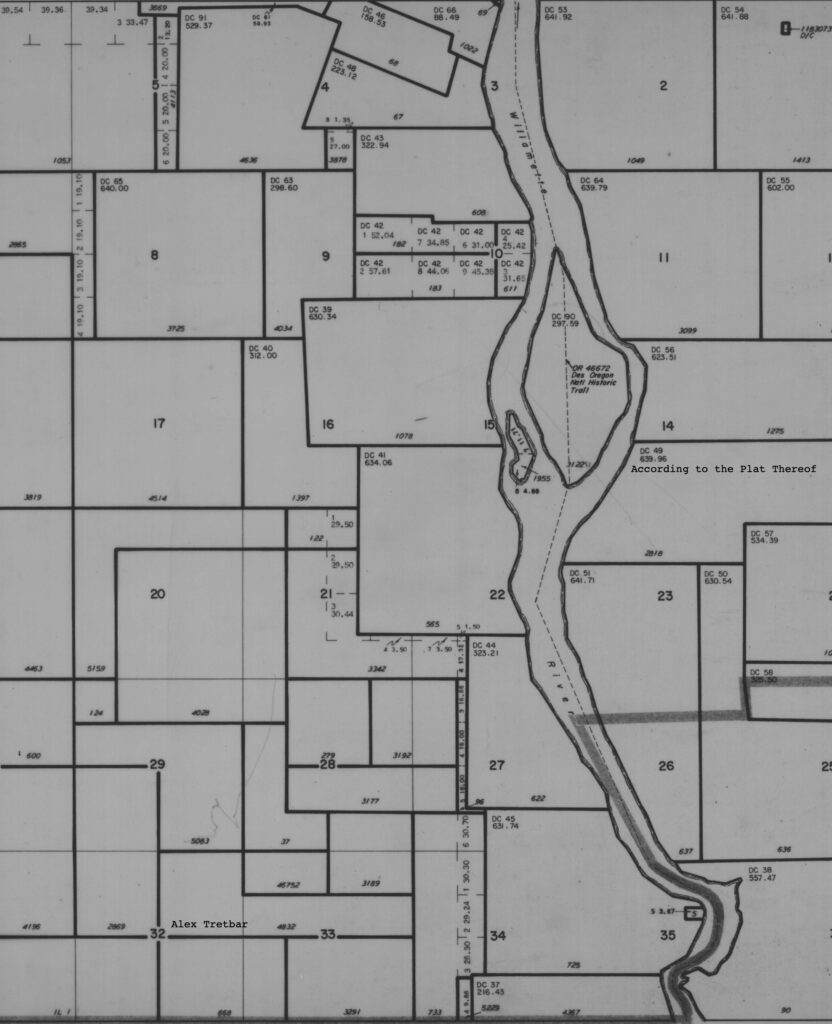
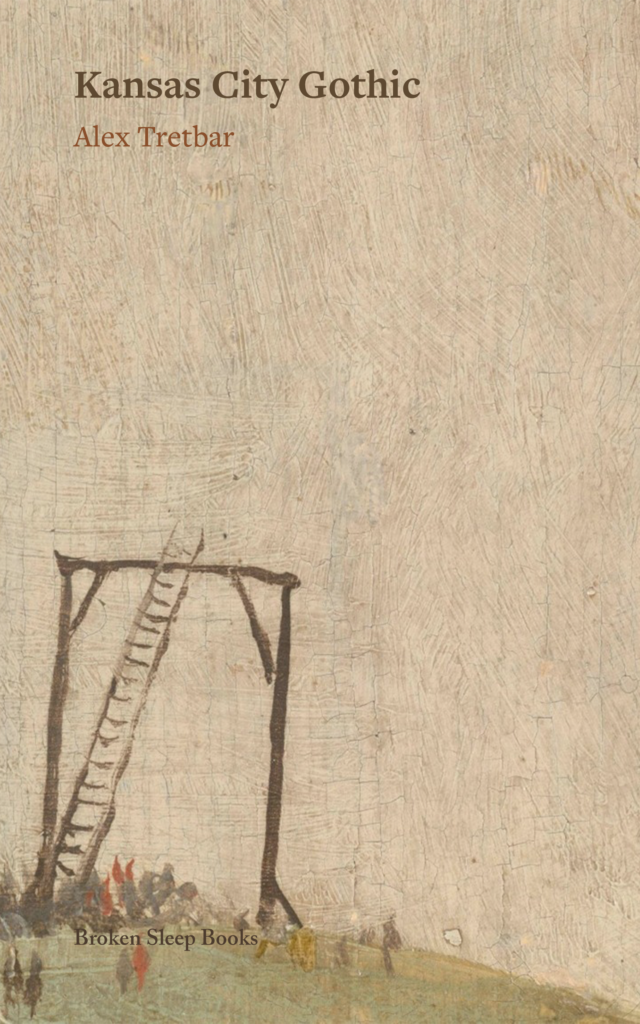
According to the Plat Thereof and Kansas City Gothic
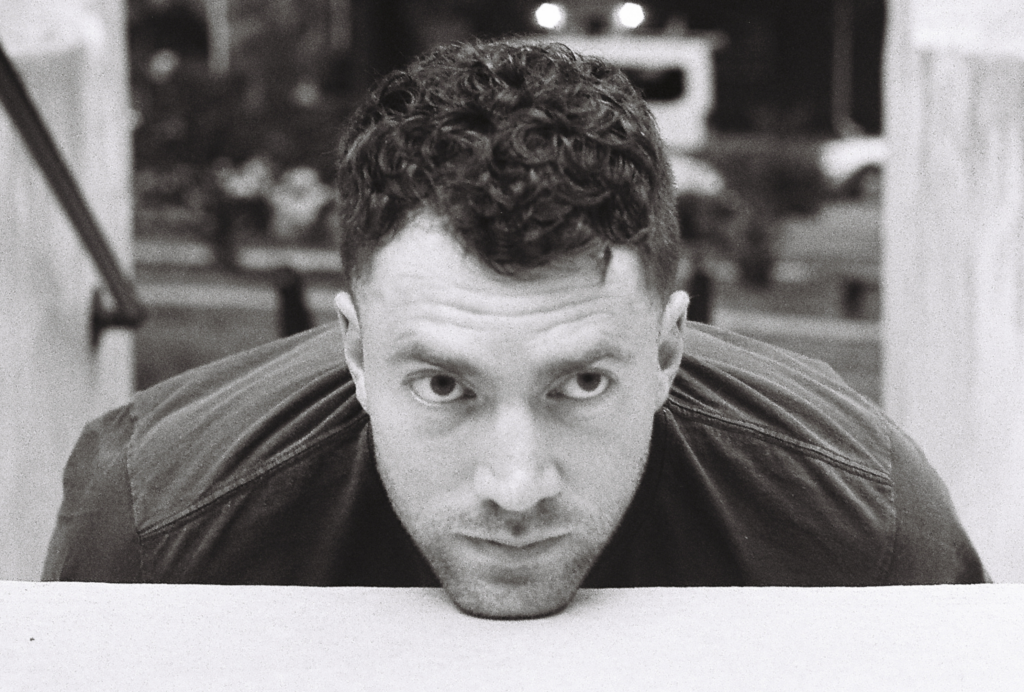
Alex Tretbar is the author of the forthcoming novella Dogsmind (Dead Mall Press) and the chapbooks toofarwandered (Tilted House), According to the Plat Thereof (Ethel), and Kansas City Gothic (Broken Sleep). Alongside students, alumni, and faculty from the University of Missouri-Kansas City, he teaches creative writing at Chillicothe Correctional Center, a women’s prison in Missouri. His poems, fiction, and nonfiction appear or are forthcoming in Annulet, Bat City Review, Chicago Review, Denver Quarterly, Fence, Kenyon Review, Poetry Northwest, Shō, The Threepenny Review, VOLT, and elsewhere.
Photo Credit: Anthony Procopio Ross
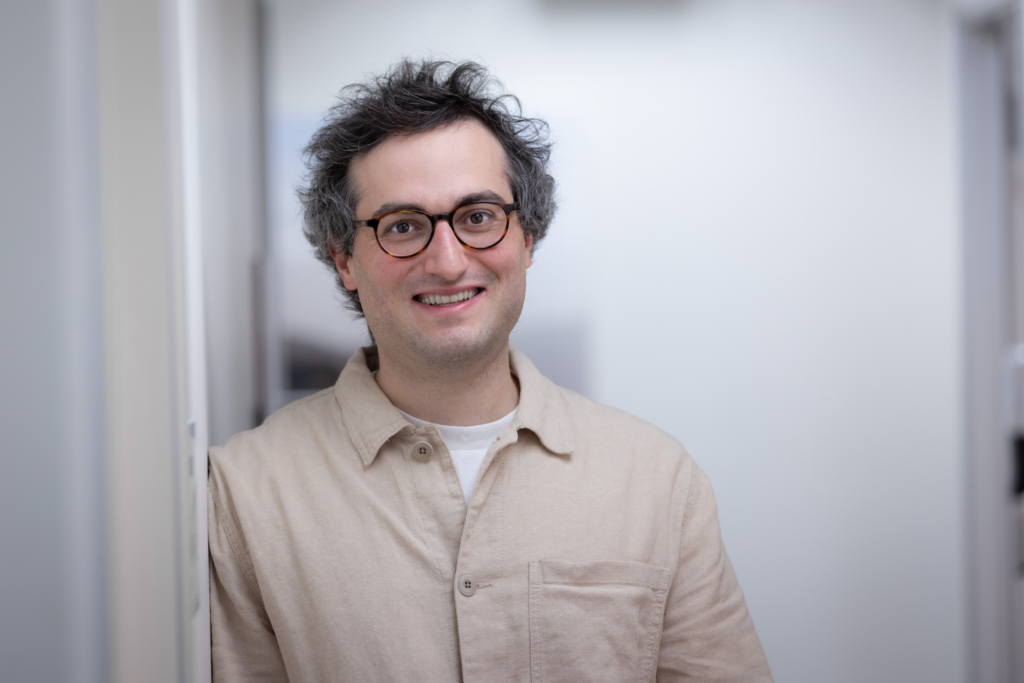
Michael Juliani is a poet, editor, and writer from Pasadena, California. His work has appeared or is forthcoming in outlets such as The Southern Review, The Georgia Review, Third Coast, Bennington Review, Washington Square Review, and Sixth Finch. He has an MFA in poetry from Columbia University.
Photo Credit: Ricardo Carrasco III
This interview was published on Thursday August 13, 2026.