INTERVIEW
A Conversation with Mckendy Fils-Aimé
On Haitian superstitions, language, generational trauma, and the role of truth-telling and love in writing about culture and inheritance
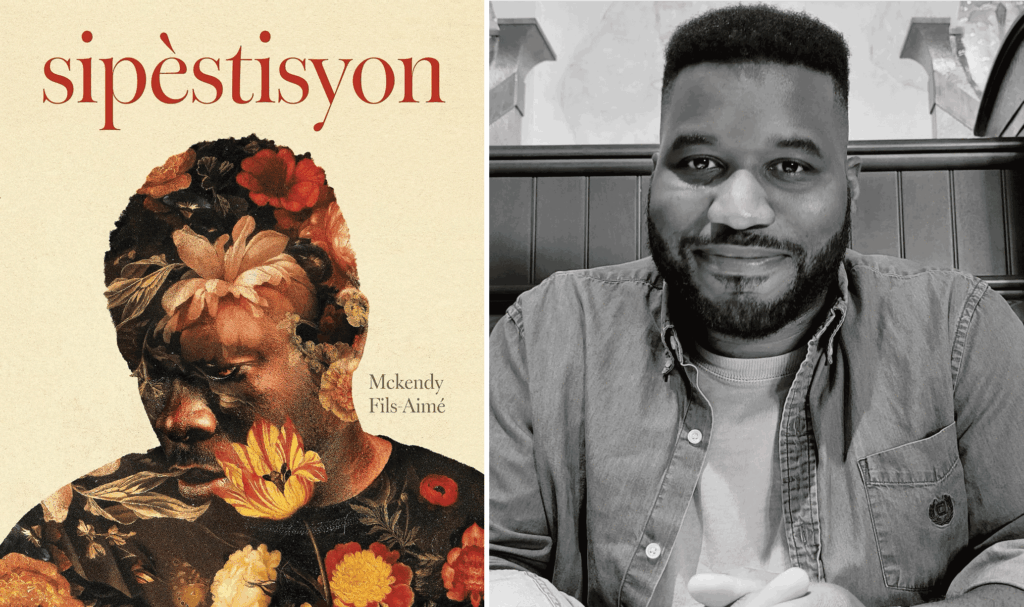
JeFF Stumpo interviews Haitian American poet Mckendy Fils-Aimé on his debut full-length poetry collection sipèstisyon (Yes Yes Books, 16 June 2026). Mckendy’s poem “Jesus Year” was first published in Shō No. 5 and appears in sipèstisyon.
JeFF Stumpo
I’d like to start by mythmaking with you for a moment. You and I first met in the world of poetry slams over 15 years ago, where you were already a force. You’re plugged into your Haitian heritage (I remember you excusing yourself from a poetry salon because you and your wife were going to spend New Year’s Day making soup joumou). You got a writing workshop in which we both belong to start doing book discussions because you wanted part of the texture of the group to be “who has come before us and how have they done what they’ve done?” And the book concerns itself many times with your parents and your complex relationship with each of them. So here’s the question: Beyond just “how did you start writing sipèstisyon,” what is its origin story?
Mckendy Fils-Aimé
sipèstisyon stems from the folklore, superstitions, and cultural attitudes that informed my upbringing. It is also about the inheritance and rejection of generational trauma. I started writing poetry in 2004 after reading Edgar Allen Poe in my high school English class and learning about metaphor. I had moved to New Hampshire from New York four years prior and was still processing childhood trauma. I needed an outlet to express myself, and chose writing. After I graduated, I discovered the local poetry slam scene and started trying to improve my craft. My Haitian identity and relationship with my parents would occasionally appear in my early work, but it wasn’t until early 2017 that I was able to write about both successfully. During a 30/30, I decided to start writing poems about the superstitions I would hear growing up. These poems allowed me to explore my upbringing in a new and fresh way. The superstition poems became the connective tissue between what I had written before and laid the foundation for sipèstisyon.
JeFF
A lot of European superstitions are about fear. Is it the same way with Haitian superstitions? If so, is you writing superstition poems a way of writing through your (or someone else’s) fears?
Mckendy
Definitely, at least in my experience. All superstitions are about a fear of the unknown. They’re what happens when we try to force the world’s unpredictability into a conditional statement. The truth is, we can’t guarantee the accuracy of the hypothesis or conclusion because so much of what happens in the world is random and out of our control. I didn’t write the superstition poems out of fear or the need for control, but an interest in exploring these sayings that I grew up hearing. I wanted to see what that exploration would bring out of me. It turns out they became a vehicle to examine the past, relationships, and generational trauma.
JeFF
This is an interesting distinction — that superstition is rooted in fear, but a poem rooted in superstition can be separated from that fear and can even be separated from a need to exert control over it. So when you say the poems are a means to examine things like generational trauma, what does it mean to you to stand as an observer of that trauma rather than someone trying to fix it? Or is there some mechanism by which acknowledging the trauma and turning it over does in fact relieve it without the…let’s say aggression of trying to control it?
Mckendy
Great question! I don’t know if a poem about superstitions can be completely divorced from fear and control, but I can say I didn’t consciously write the superstition poems with that in mind. Trauma can’t be fixed with a poem, and healing takes therapy and internal work. However, I think that writing about it can create opportunities for catharsis, truth-telling, and archiving. All three are present in sipèstisyon, but for me, the truth-telling is very important. The ability to acknowledge trauma, to call it what it is, and state how it’s affected your life is very powerful.
jeFF
You’ve got poems that invoke Kreyòl and your re-practicing the ability to speak it, such as in “pâté,” where at new Haitian bakery the clerk “watches [your] tongue turn like a key / in the ignition of a car that’s been sitting.” Tell us about the importance of calling something what it is in a language you knew as a child but have been told by the country to set aside.
Mckendy
The United States calls itself a melting pot, but it’s intolerant of any language that’s not English, and, depending on what you look like, that can put you in danger. To be intentional about speaking your second language, regardless of your proficiency, feels like an act of resistance. I started re-practicing Kreyòl because I felt like I was becoming complicit in my own erasure. I didn’t want to be the cause of the removal of Kreyòl from my bloodline. One of the reasons I titled my collection sipèstisyon was because I wanted the reader to know upfront that the book was not operating solely in American culture.
“When you’re a kid and learning languages through osmosis, sometimes you don’t always think about what the individual words of a phrase mean. Sometimes it takes a while for you to stop and think about how each word translates.”
jeFF
I want to get back to resistance and danger and erasure in a moment, but without setting those things aside, what are some words and phrases in Kreyòl that you love?
Mckendy
There are too many words and phrases that I love, some because of sonics, others because they remind me of my childhood. Words like damou, kalewes, and anana sound good rolling off the tongue and are fun to say. When I hear wap konn Jòj, I’m reminded of my childhood, of getting into the same mischief over and over despite my mother’s warnings. I’m also reminded of the Mach-Hommy album of the same name. I even love a common phrase like demen si dye vle because, despite growing up saying it and understanding the appropriate context to use it, I didn’t realize it meant tomorrow, if God allows. When you’re a kid and learning languages through osmosis, sometimes you don’t always think about what the individual words of a phrase mean. Sometimes it takes a while for you to stop and think about how each word translates.
jeFF
That’s a very poet way of viewing that part of childhood, that growing up is asking why we even say the things we say. To ask a pointed and related question, do you think working on what something means in two languages gives you a leg up (to use a fun English idiom) when it comes to plumbing the depth of English-language poetry? To immediately follow that with an even more pointed question, do you think working your brain in two languages gives you a leg up on plumbing the depths of American cultures (deliberately rendered plural here)?
Mckendy
Absolutely. I think knowing two languages is very useful for learning different etymologies. Some words and phrases don’t translate very well to English, but carry interesting ideas that I want to explore. I’m fortunate enough to know Kreyòl, which is a composite of at least three languages. I’ve been told that I have a high level of linguistic semantic flexibility, and I think that being bilingual is the reason. Even in my least proficient, I have never seen the world or words through the lens of one language. It’s great because it feels like possibility is always around the corner.
jeFF
With that phrase, I want to wrap this back around to the aforementioned resistance and danger. When you’re multilingual, possibility is always around the corner. But danger is around the corner as well. People who want to stamp out that which they refuse to understand will always make a target out of another language. But, on yet another hand, being able to see possibilities is how resistance is born, yeah? Linguistically, it escapes the binary trap. This is maybe less a question than a thesis that I’m hoping you’ll riff off of.
Mckendy
Being multilingual and from a family of immigrants really broadens your perspective. You have access to the ideas and attitudes of multiple cultures, which increases possibility. It’s been a real gift for me. As it leans more and more into xenophobia and fascism, the United States has deluded itself into thinking that it’s monolingual. To dare to speak more than one language and to embrace your culture is to push back against xenophobia. It’s the bravest thing you can do, especially in times like these. It’s an act of resistance, but also an embracing of your imagination, which is one of the most powerful tools of the human spirit; that and love.
jeFF
Speaking of love (again), who do you most wish could read your book?
Mckendy
It’s very important to me that the people in my local artistic community engage with this project. Many of them heard and workshopped the earliest versions of the poems in sipèstisyon. I think it’s natural that they’re the first people that come to mind when I think about audience. Outside of them, I hope that people with similar cultural backgrounds to mine, people with stories of immigration, people familiar with generational trauma, read sipèstisyon. I hope this project resonates with them.
jeFF
It’s so vital to have a community of your choosing, however big or small. But also, I’m re-reading “ode to the gris-gris bag” for the fifth or sixth time (plus having heard you read it), and I’m looking at the magic, both literal and metaphorical, presented to you by your grandma, “a gift plump with bay leaves, / rosemary, dollars, and her whispers.” And there’s this passage:
	whatever she whispered must be
	a barrier: endless ancestors
	glaring down misfortune & saying

	no. not him. he is ours.
There’s plenty of generational trauma in sipèstisyon, but there’s also generations past like your grandma, and I have to ask about the part of you trying to not only excavate and process trauma, but raise up and honor some of those who came before you.
Mckendy
It’s important to me that I write about my culture in a way that feels respectful and not exploitative. So many sacrifices were made for me to be here, so many people whom I’ve never met went without or died to create this opportunity. Those sacrifices are acts of love, and like the sentiment of ode to a gris-gris bag, I think that love is a protective force, a force that has outlasted the span of a human life. The least that I can do is to write about my identity in a way that doesn’t feel cheap or like a mockery. That’s part of how I create art that feels true and ethical for me.
jeFF
Speaking of ethics, there’s a great poem in the collection about people who think they’re doing the right thing but aren’t, “the all white congregation discusses race while i take selfies.” I hope this interview hasn’t been an exercise in inadvertently, as the poem relays, “call[ing / you] exotic.” Not to ask you to do an undue amount of lifting here, but what are some pitfalls you’d like people who aren’t intimately familiar with the things you talk about in the book to avoid?
Mckendy
That’s a hard question to answer because I’m still very new to having a book in the world, and I’m still discovering how people are engaging with this work. However, I do think it’s important for people to understand that real learning occurs beyond sipèstisyon. While this collection might elicit emotions, that’s not necessarily the same thing as education. A single book of poetry will not teach you everything you need to know about racial violence, generational trauma, or Haitian culture. There are plenty of books and media that can teach you about the themes in sipèstisyon. When you’re finished with sipèstisyon, go seek them out.
I guess another pitfall is to avoid getting caught up on fact vs fiction. I’ve found that people who are not used to reading or hearing confessional poetry tend to ask poets questions like “Did that really happen to you?” I know this from personal experience. I think that emotional truth, journey, and craft are far more important than whether or not something happened exactly as described in a poem. Sometimes the facts of a story are far worse than what’s in the poem. Let yourself experience the book rather than getting hung up on facts.
jeFF
It’s a good answer. It kind of puts a bow on the themes we’ve been discussing. So, to close this out, since I know we’re both sad that the podcast VS has ended, I want to ask you one of the questions they always ask there: What’s moving you?
Mckendy
Thank you for that question. I love VS so much, and I’m sad that it ended. That podcast was excellent at providing insight into the processes of both seasoned and emerging poets. It had a lot of heartfelt conversations, too. So many things are moving me right now. sipèstisyon’s release date is drawing close, and I’m looking forward to celebrating with my poetry community in New England and beyond. I’m on pace to finish the first draft of my second manuscript by the end of the year. Finally, I co-founded a writing retreat with some friends of mine a few years ago. We’ve been working hard planning it this year, and things are going really well. Life is busy, but also super exciting.
Order sipèstisyon by Mckendy Fils-Aimé here
sipèstisyon by Mckendy Fils-Aimé is a lyrical excavation of memory, migration, and mythology—both personal and collective. Rooted in Haitian superstition and shaped by the echoes of generational trauma, these poems weave between languages, landscapes, and histories. “If memory is a museum / what happens if it’s ransacked?” the speaker asks, navigating the weight of family inheritance, the fractures of language, and the search for belonging. At its core, sipèstisyon is a meditation on the ghosts we carry, the stories we inherit, and the ways in which we transform pain into something sacred.
—Diannely Antigua, author of Good Monster
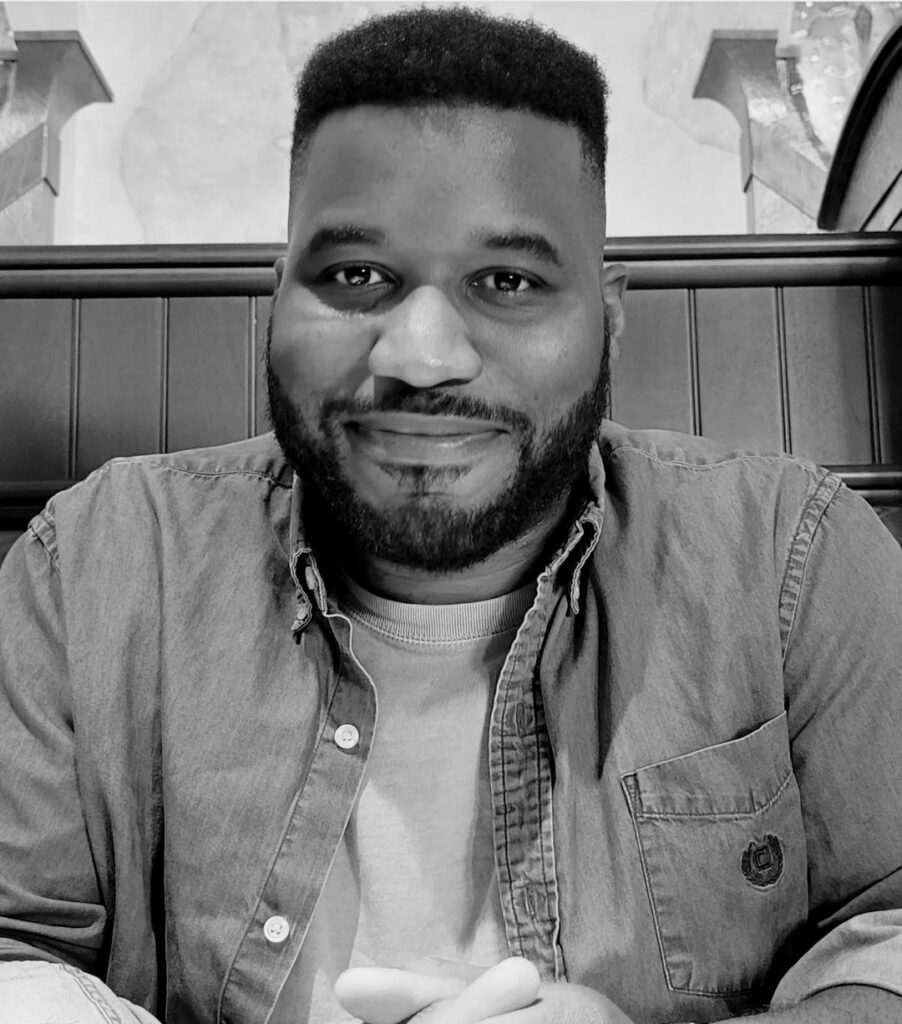
Mckendy Fils-Aimé is a New England based Haitian-American poet, organizer, and teaching artist. He has received fellowships from Callaloo, Cave Canem, The Watering Hole, and Periplus. His work has appeared or is forthcoming in Best New Poets, Adroit, Muzzle, the Academy of American Poets’ Poem-a-Day series, and elsewhere. His debut poetry collection, sipèstisyon, was published by YesYes Books in 2026.
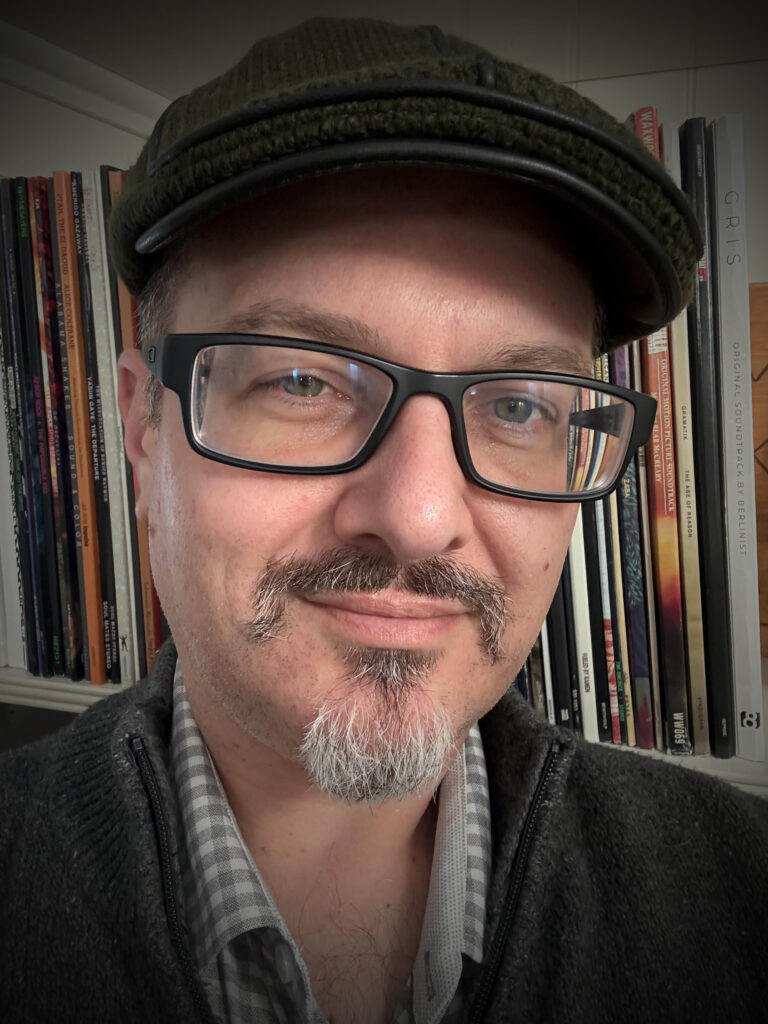
JeFF Stumpo is the author of these are the waterfalls in my head, which won the 2026 Granite State Poetry Prize and is available from Yas Press (University of New Hampshire). His work has appeared or is due in Prairie Schooner, Rattle, The Journal, Gordon Square Review, and elsewhere. He, Mckendy, and Beau Williams performed the first group American-Sign-Language-based poem at a National Poetry Slam as teammates in 2010.
This interview was published on Friday June 5, 2026