For Hispanic Heritage Month, listen to Carlos Andrés Gómez, Sophie Kaiser Rojas, Jenny Sadre-Orafai, Jacob Herrera Spears, and Virgil Suárez read their work published in Shō Poetry Journal Issues No. 8 and No. 9.

“Sundowner” by Jacob Herrera Spears
My father, the drunkard
                   spits into his palms, cleans
                                      his face in someone's hubcups.
About this Poem: I wrote this just after getting home from a trip to visit my father. I was sitting in a church service. unable to pay attention. These visits tend to stir up old memories, leaving me to parse out all the different people he has been throughout my life. I was sitting there staring up at this chandelier, tuning out the sermon. Coming back to this poem now I can’t help but notice a liturgical rhythm through the repetitions of “My father,” and a similarity in its shape to the dangling arms of a chandelier.
“Sundowner” appeared in Shō No. 9

Jacob Herrera Spears is from Goleta, California. His poems have been featured or are forthcoming in journals such as Passages North, Rattle, and PLUME, among others. His writing has received support from the Community of Writers, and he is an incoming MFA candidate in poetry at Johns Hopkins University.
“Dissolving Selves” by Jenny Sadre-Orafai
You’ve neglected your wife. You’ve turned her
into a ghost. I can say that because I believe in ghosts more
than I believe in marriage.
“Dissolving Selves” appeared in Shō No. 9

Jenny Sadre-Orafai is the author of Paper Cotton Leather, Malak, and Dear Outsiders and the co-author of Book of Levitations. Her poetry has appeared in Wildness, Shō Poetry Journal, Puerto del Sol, Cream City Review, Ninth Letter, and elsewhere. Her prose has appeared in The Rumpus, Fourteen Hills, and The Los Angeles Review. She co-founded and co-edits Josephine Quarterly and teaches and mentors creative writers.
“Self-Portrait as Sunshower” by Sophie Kaiser Rojas
I can narrow down where you are from
by whether you call this rain a jackals’
wedding or a monkeys’ wedding.
About this Poem: When I worked at a university in Mexico, one of my lessons as an English teaching assistant was on sociolinguistics. As a warmup, I would take the NYT Dialect quiz alongside my class to illustrate all the idiomatic ways we refer to the same things across the United States and their cultural implications. The quiz tries to place your region of origin by how you say certain terms, and it was this activity that sent me down the rabbit hole of sunshowers. Throughout the country, but particularly in the south, it is usually some iteration of “the devil is beating his wife.” As you leave North America, the motif of the wedding remains, but the occasion changes—”monkey’s wedding” from the Zulu language, “a wedding is being celebrated in Hades” from the Finnish. I was fixated by the lore of how my favorite weather phenomena was linguistically infused with so much romance, femininity, and violence. I knew I had to write on it, only to find Natalie Shapero already had written an ingenious poem with the same fodder. I put the idea on my to-do list and left it on the backburner for almost two years, when I found myself wanting to write a poem using the myth of Demeter and Persephone. As I chewed on it, I realized the semantic typology of a sunshower was already deeply infused with myth—fantastical marriages, dramatic weddings, witches making bread and butter. As the best myth (and poetry!) does, the poem led me from there to a place I could have never gotten to on my first attempt a couple summers ago.
“Self-Portrait as Sunshower” appeared in Shō No. 9
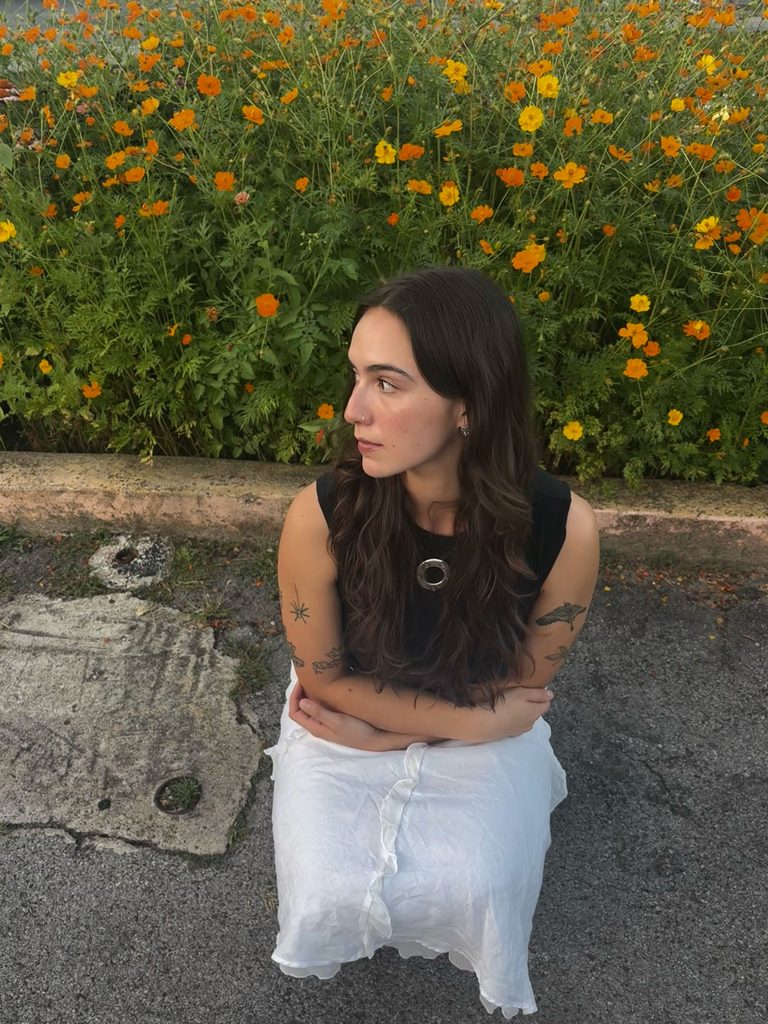
Sophie Kaiser Rojas is from Colorado. She is the recipient of a Fulbright award to Mexico. Her writing has received fellowships/support from The Kenyon Review, Brooklyn Poets, and The Porch. Her poems appear in Shō Poetry Journal, Salt Hill, Grist, wildness, and The Nashville Review, among others. Language is her profession, her past-time, and her passion.
“Kyoto Rain” by Virgil Suárez
Your cupped hands hold the crystal ball your mother gifted
you as she left in the wake of so much water.
“Kyoto Rain” appeared in Shō No. 8

Virgil Suárez is the author of most recently RED FACED POEMS, a chapbook. He lives in fucked up Florida.
Read more about Virgil Suárez here.
“Masked” by Carlos Andrés Gómez
I come from men who undulate
into stillness, steady like liquor

beneath the lip of a glass
(silhouettes fluttering

the backdrop like scattered
magpies), expressions unmoved

as though carved from marble.
[ Read the full poem online here ]
About this Poem: Until poetry gave me permission toward an expansive embrace of paradox that allowed me to fully encounter the wide, contradictory, messy, and nuanced dimensions of human experience, it felt near impossible to begin to make sense of the men I have so loved who embody the extremes of how manhood postures and evades.
This poem reckons with how I’ve tried to make sense of those examples and lessons, in lineage with the mythologies, both familial and cultural, that shape my understanding of myself.
“Masked” appeared in Shō No. 8
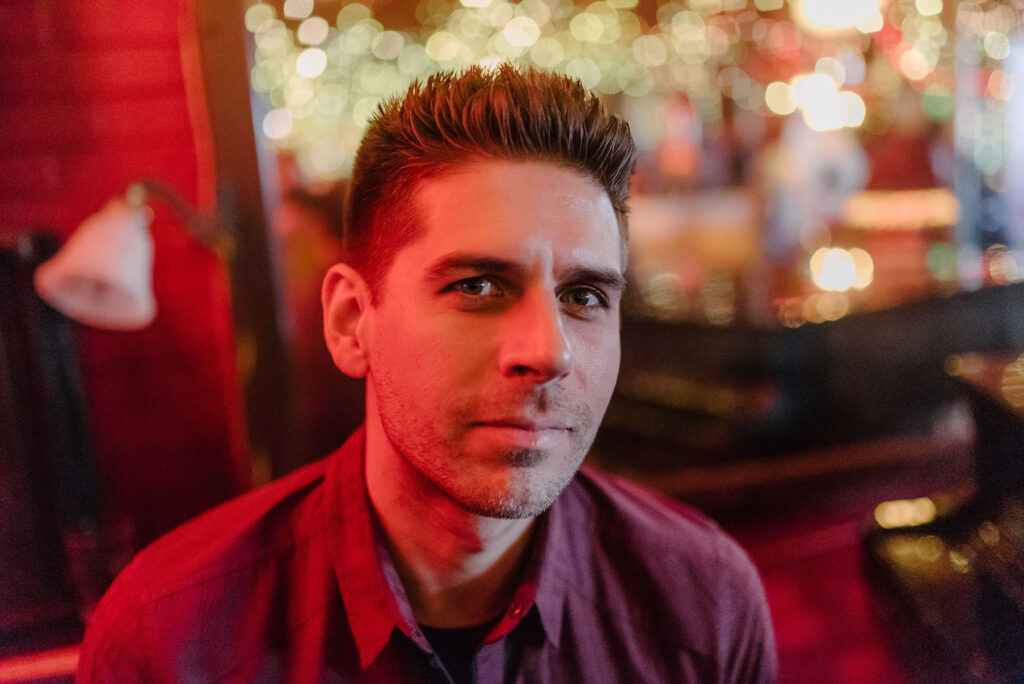
Carlos Andrés Gómez is a Colombian American poet from New York City. He is the author of Brutal Miracle, forthcoming from Four Way Books in September 2027, and Fractures (University of Wisconsin Press, 2020), which was selected by Pulitzer Prize winner and 19th U.S. Poet Laureate Natasha Trethewey as the winner of the Felix Pollak Prize. Winner of the Foreword INDIES Gold Medal and the International Book Award, Gómez has been published in Poetry magazine, The Kenyon Review, The Nation, New England Review, The Sunday Times, Academy of American Poets’Poem-a-Day series, The Yale Review, Poetry Unbound: 50 Poems to Open Your World (W. W. Norton, 2022), and elsewhere. Carlos is a graduate of the University of Pennsylvania and the MFA Program for Writers at Warren Wilson College. He can be found @CarlosAGLive or CarlosLive.com
PREVIOUS FEATURES
RELATED WORK
One Poem by Saúl Hernández
“Abecedarian for My Undocumented Amá’s Tongue in TX” from Shō No. 7